
|
Index
The answers to the questionnaire
|
To understand how the issue of expiry dates is perceived and regarded by consumers, A Good Opportunity has commissioned the Department of Economics of Turin University – a statistical survey in order to test the consumers’ behaviours when buying and consuming food in Piedmont and Valle d’Aosta.
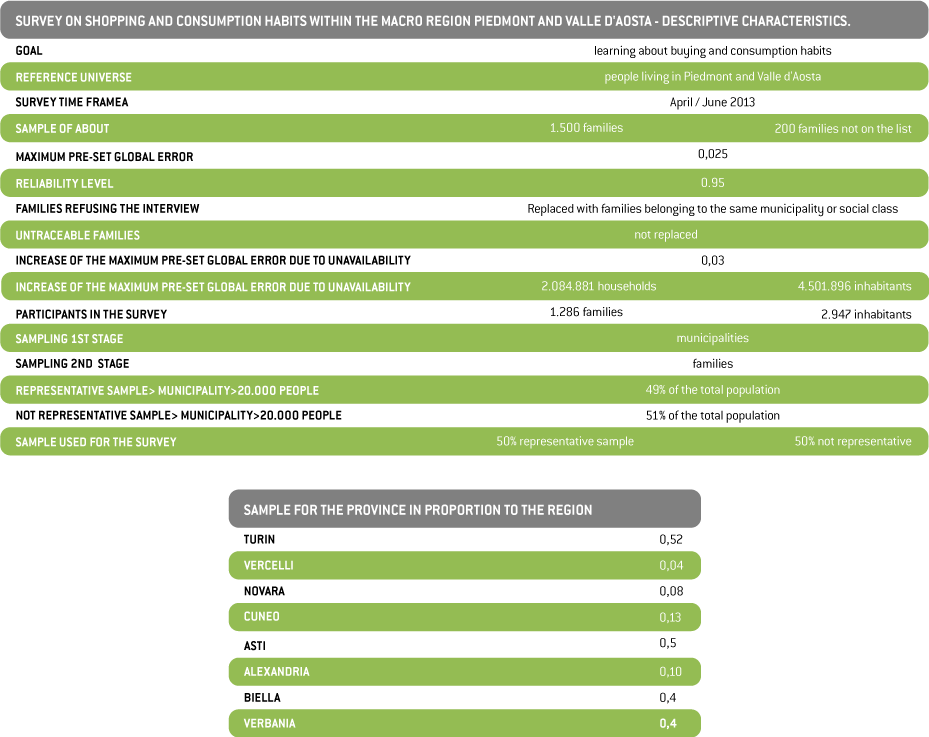
The survey carried out on a random sample of families from Piedmont and the Aosta Valley aims to define different profiles in purchasing behaviour and food consumption.
Almost 95% of the interviewees consists of people who takes care of grocery shopping while the remaining 5%, even if not directly involved, knows well the buying habits of those who, in the family, carry out this task.
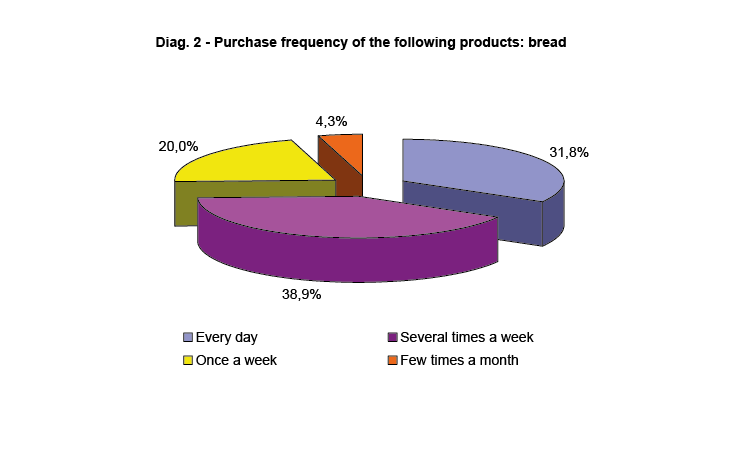
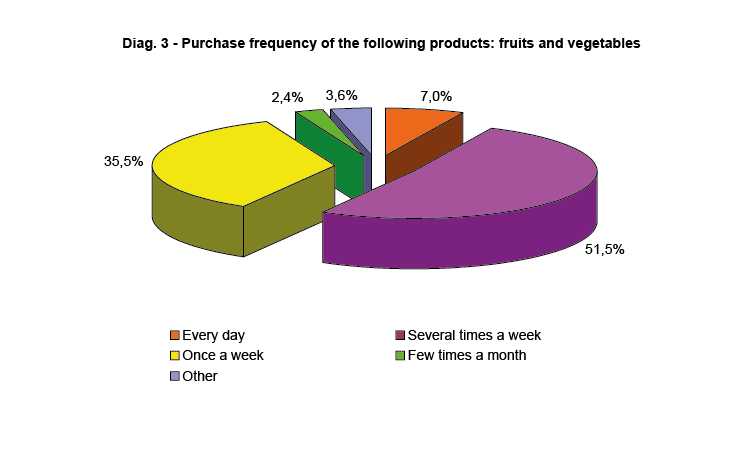
The frequency with which the grocery shopping is done, actually depends on the kind of food purchased; for example, bread is purchased daily by 32% of the families and several times a week by 39%. Fruits and vegetables are purchased weekly by the 94% of households: throughout each week in 58.5% of cases, and once a week in 35.5% of cases.
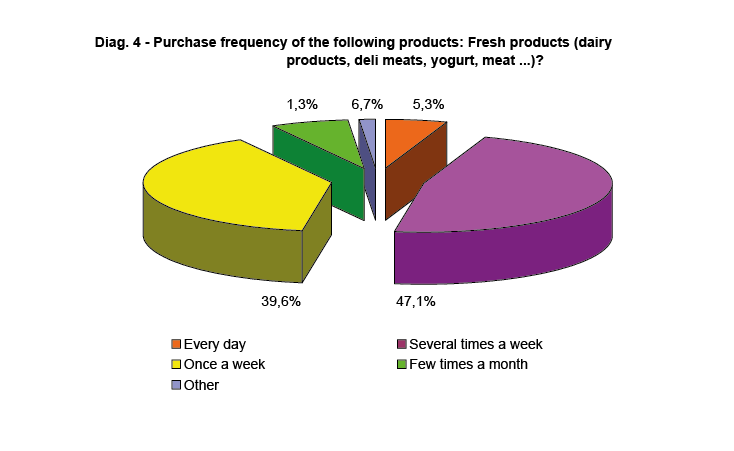
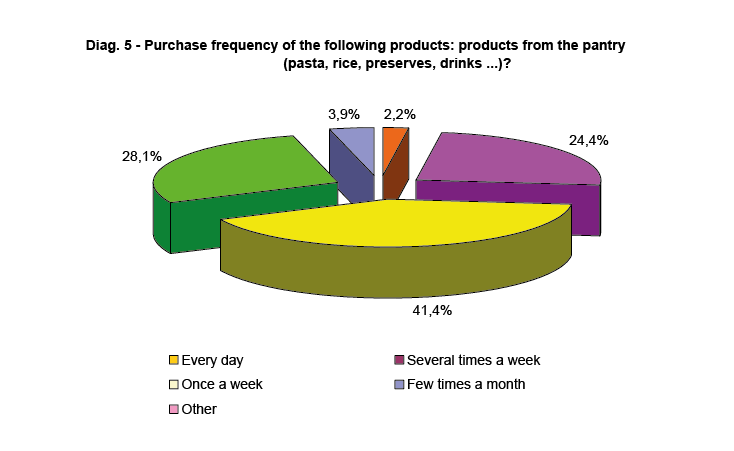
Even fresh products, such as dairy products, deli meats, yogurt, meat, etc.., are purchased weekly by 92% of the interviewees, with a 47% of the families buying several times a week and 39.6% once a week. Larder provisions such as: pasta, rice, preserves, beverages, coffee and so on are purchased at different intervals. In this case, only 26.8% of households plans weekly purchases while for the remaining 69.5% of families do it once a week in 41% of cases and monthly in 28.1% of cases.
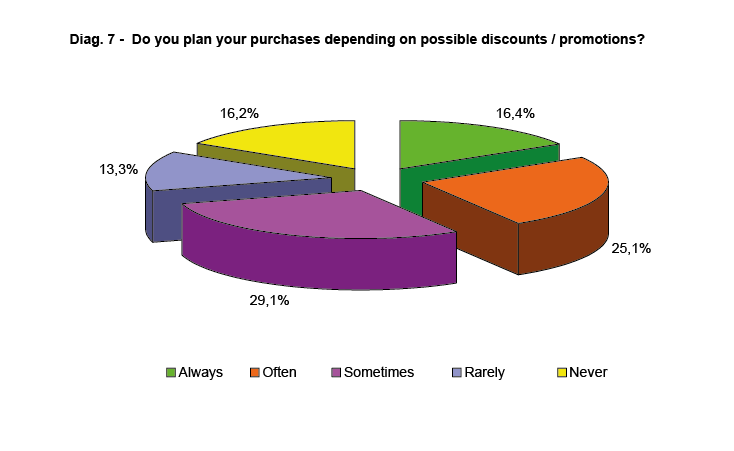
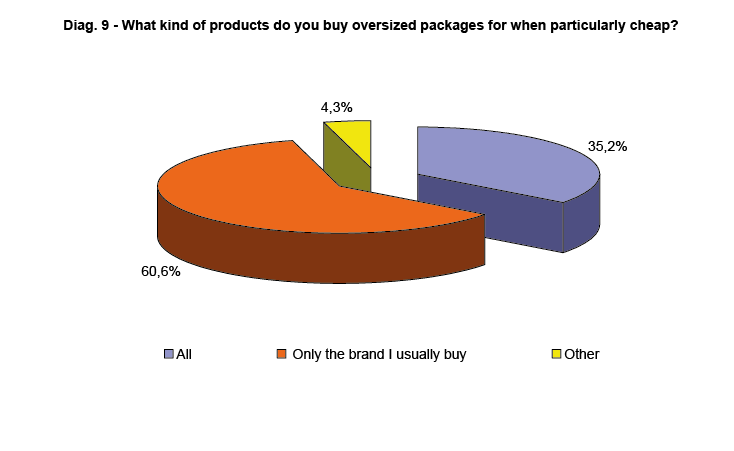
Food purchases are always or often planned, depending on discounts and promotions in 41.5% of cases. Despite the possible convenience, 38% of families declare they do not buy oversize packages, 25.8% sometimes, 6.6% always, 11.3% often and 18% rarely. Among those who buy oversized packages, the 61% rely on the usual brand while 35% do not care for brand but only for cheapness.
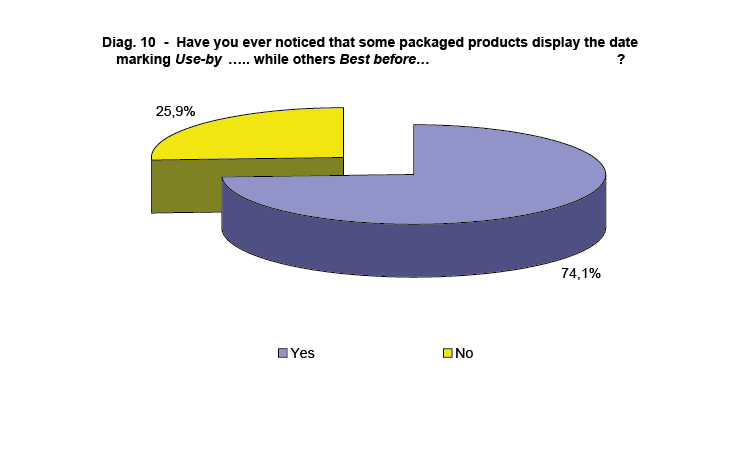
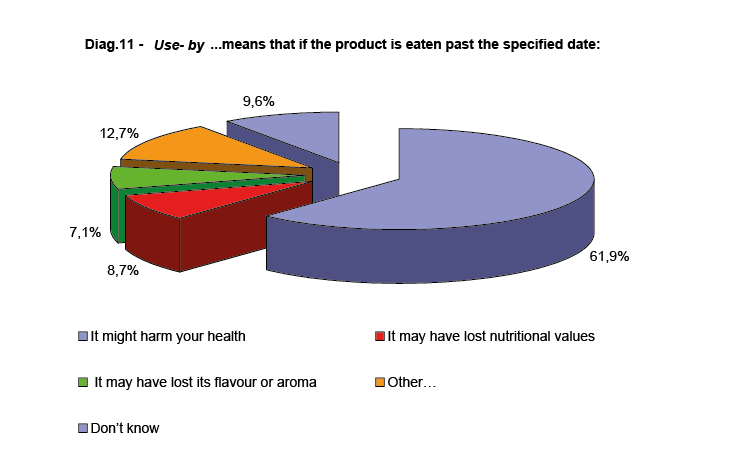
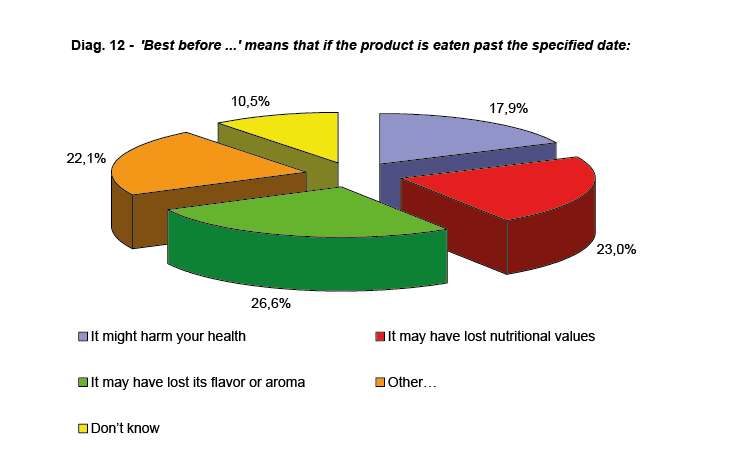
74.1% of consumers know that the products exhibit two different date labelling: Use by … or Best before … 61.9% believe that the indication Use by … means that consuming that food past the specified date could be bad for one’s health (67.7% among those who have a higher education and 53.1% among those who have a lower qualification). While, regarding the date labelling Best before … the answers are evenly distributed between: it could harm your health by 17.9%, it may have lost its nutritional properties by 23%, it may have lost flavour or aroma by 26.6%. 22.1% gave different answers, while 10,5% have no idea.

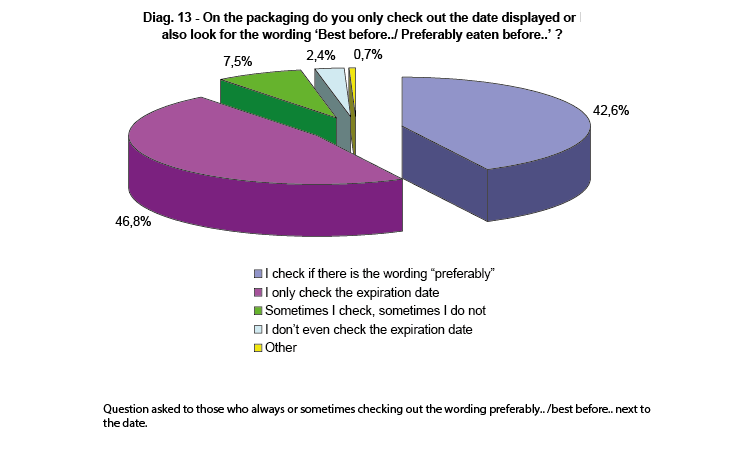
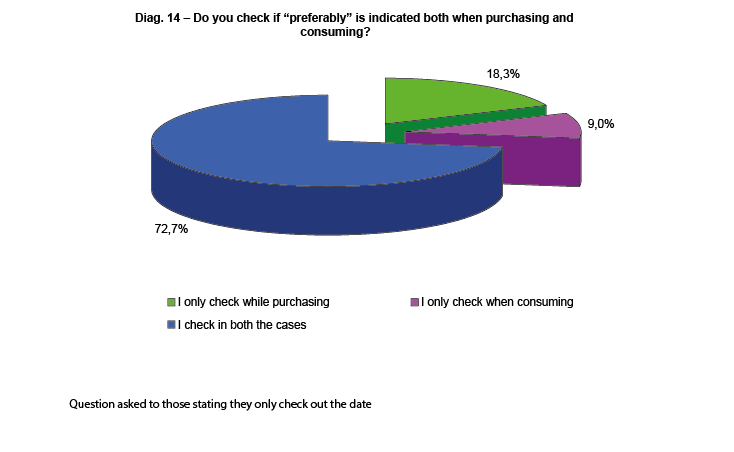
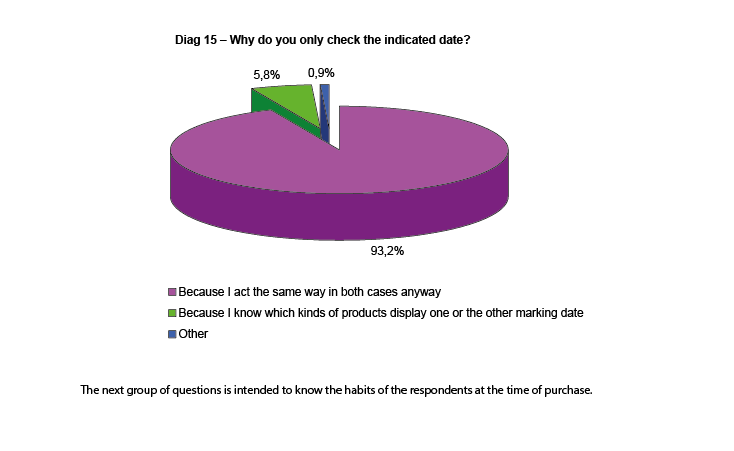
46% declare to check only the date on the package, while 42.6% also checks if the wording ‘best before’ is present; only 2.4% said they never check the date labelling on the products. Among those who always or sometimes check it, the 72.7% look also for ‘best before’ indication both when buying and when consuming; only 9% check the date before consuming and 18% while purchasing. It is important to point out how, among those who said they only check the date indicated without worrying about whether or not there is the ‘best before’ indication, at least 93% declare they have the same consumption behaviour in both cases.
Regarding the habit of checking several packages of the same product looking for the one with the farthest expiry date, 67.5% admit doing it regularly or often at least, while a good 12.8% claim to never do it. Among the ones who declare to make this choice, even once in a while, the 68.5% do it for all products and 31.5% for only a few.
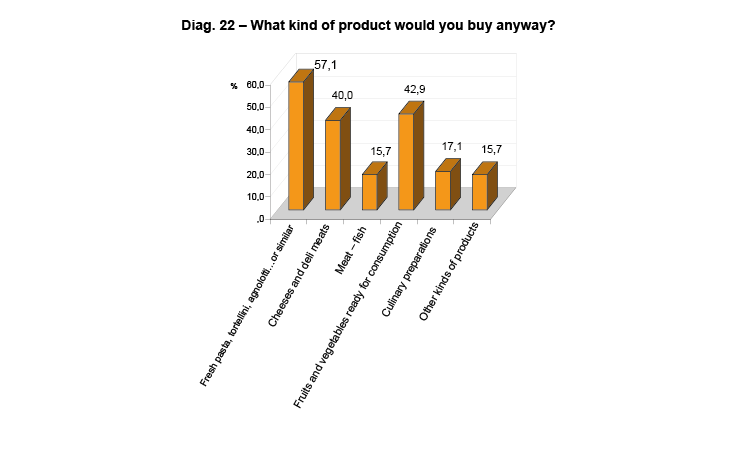
Those customers regularly checking only certain types of products generally do it for fresh products (82.5% yogurt, fresh milk 78.7%, 54.7% eggs, 51% pre-packaged deli meats and cheese). When asked about the reason for the choice of a package with the remotest expiry date 51.7% of consumers explain they are not going to eat it shortly and 47.8% believe this is a guarantee of freshness and flavour .
53.5% of those who prefer to buy pre-packaged products, are willing to buy a product with a close expiration date but still retaining its properties only if they are certain to consume it within the date indicated or shortly after, while 39.8 % will not buy it at all.
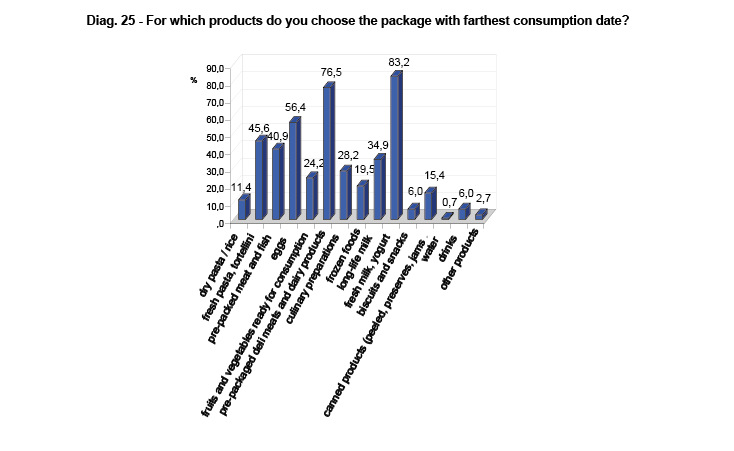
41.6% of the interviewees declare they systematically check the packaging of the products they have at home in order to prioritize those close to the date indicated on the package, while a good 17.5% declares not to check them, ever. Within the first group in 85% of the cases all the products in the pantry are checked out; this particularly happens for fresh products (83% fresh milk and yogurt, 76.5% dairy and deli meats, eggs 56%, 45% fresh pasta and 45% pre-packaged meat and fish) in order to consume them within their use-by date.
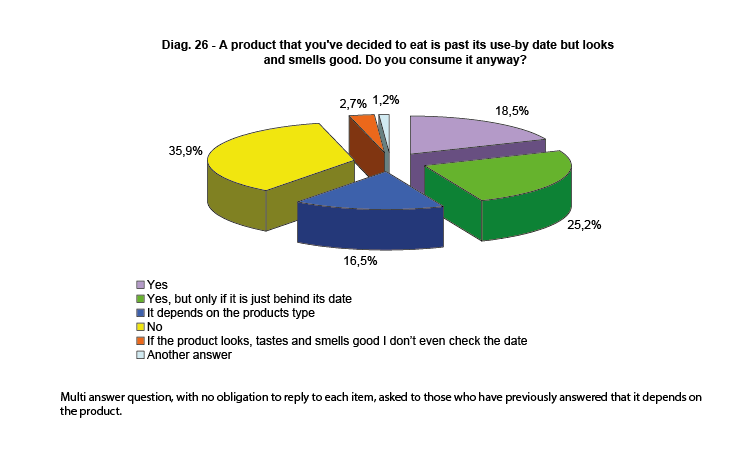
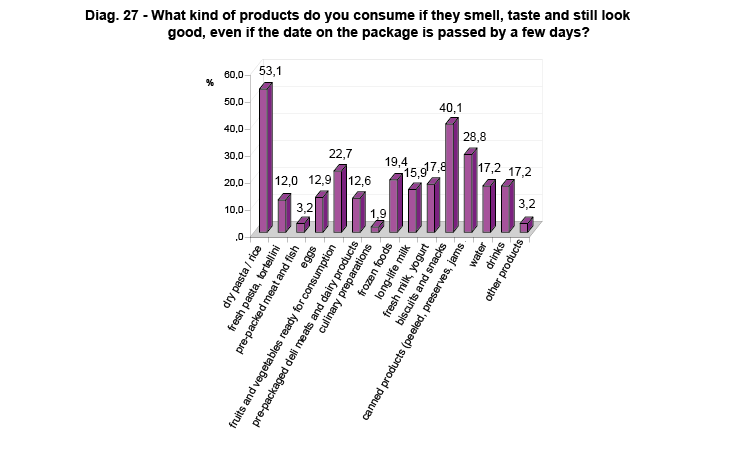
The 36% of interviewees state they do not consume foods past their expiry date, despite their good appearance, smell and taste, 25% consume them only within a few days afterwards and a 18.5% consume them regardless. Such products consumed past their use-by date are mainly those from the pantry (53% rice and pasta, snacks and biscuits 40%, 28% canned goods), while greater attention is paid to the consumption of fresh products if expired (22.7% fruit and vegetables ready for consumption, 12.6% dairy products and deli meats, 17.8% fresh milk and yogurt).
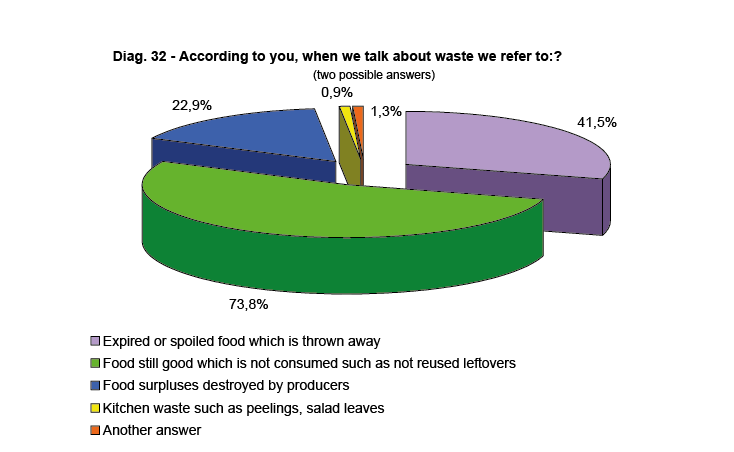
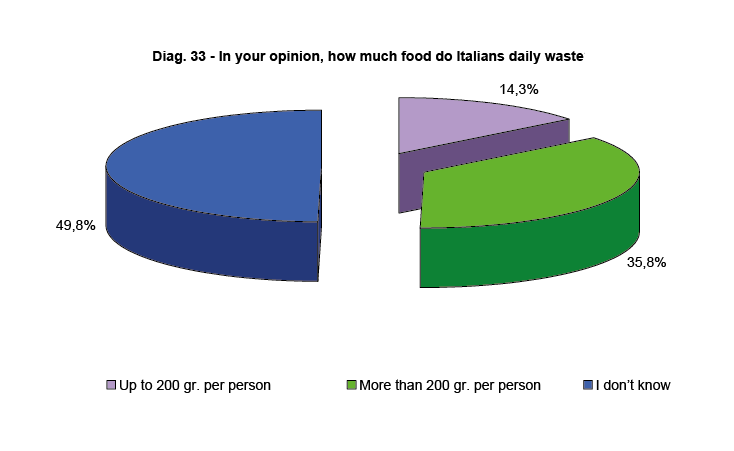
73.8% defines ‘food waste’ good food and not eaten, such as not reused leftovers, 41% refer to expired or spoiled food that is thrown away and 22% to food surpluses destroyed by the manufacturers. Almost 50% of responders have no idea how much food is wasted daily by Italians. However, 41.2%, mainly to avoid food wastage do not buy more than necessary, and 29% reuse leftovers.
The answers to the questionnaire
[accordion width=”100%”]
[item title=”TThe buying behavior”]
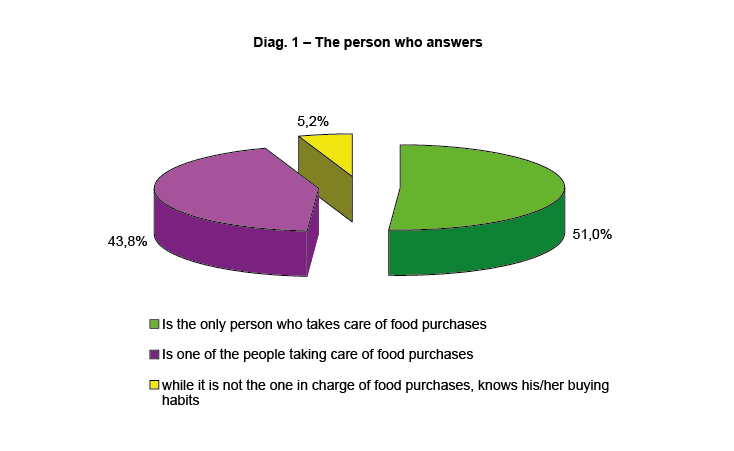
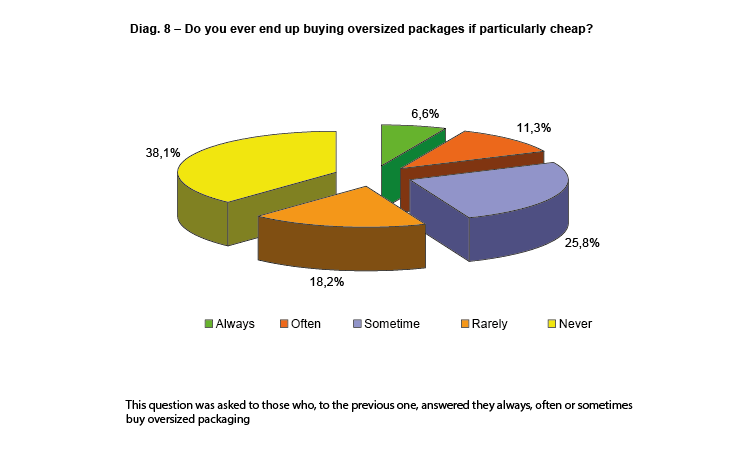
This question was put to those who, in the previous question, had responded to acquire oversized packaging – Always or often or sometimes
[/item]
[/accordion]
[accordion width=”100%”]
[item title=”Expiration dates”]
The next group of questions is intended to know the habits of the respondents at the time of purchase.
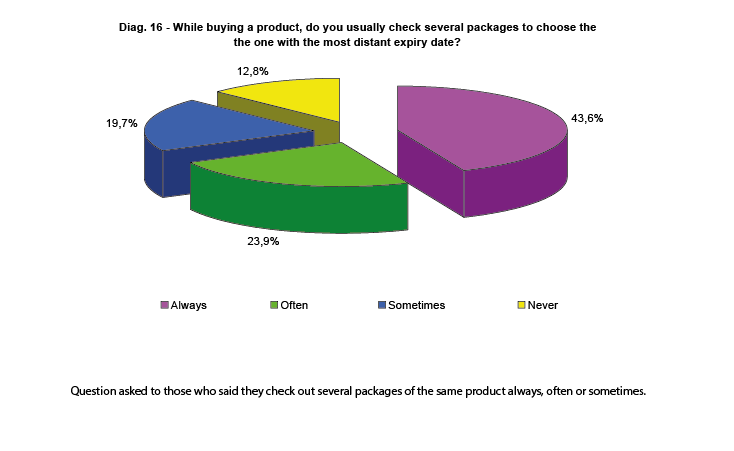
Question asked to those who said they check out several packages of the same product always, often or sometimes.
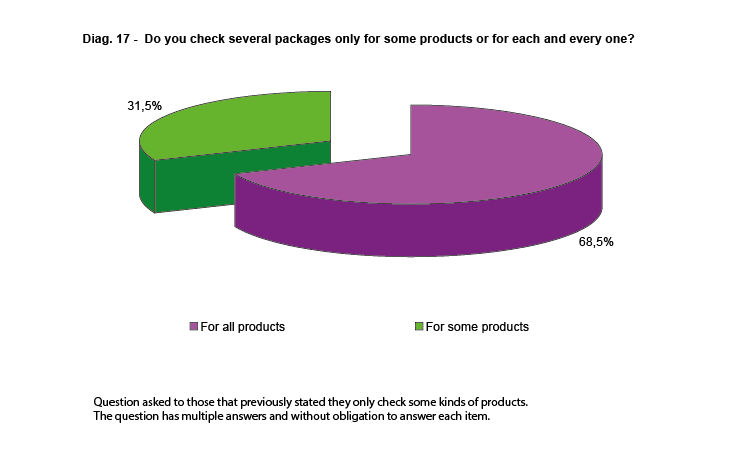
Question asked to those that previously stated they only check some kinds of products. The question has multiple answers and without obligation to answer each item.
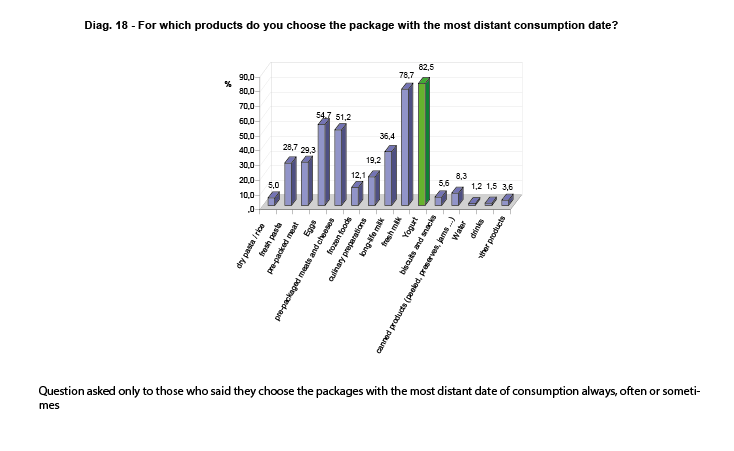
Question asked only to those who said they choose the packages with the most distant date of consumption always, often or sometimes.
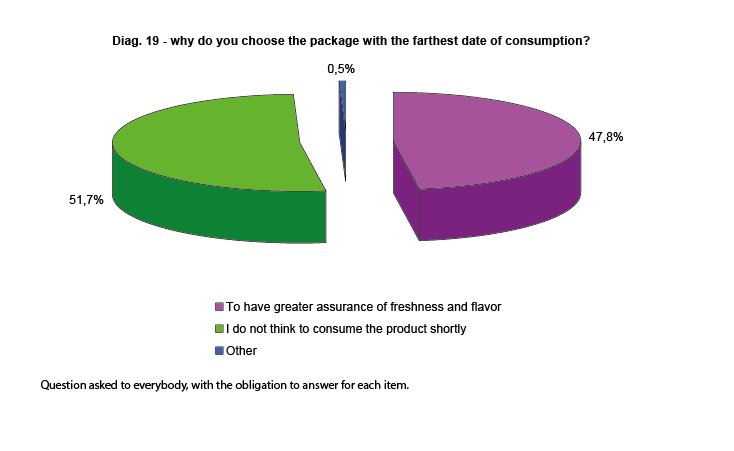
Question asked to everybody, with the obligation to answer for each item.
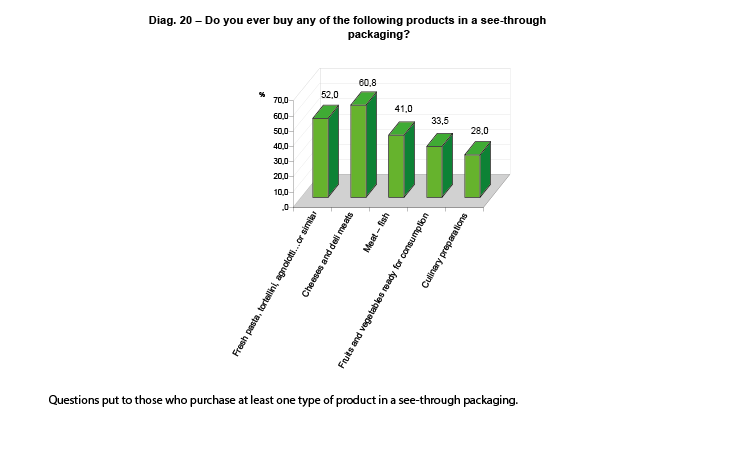
Questions put to those who purchase at least one type of product in a see-through packaging.
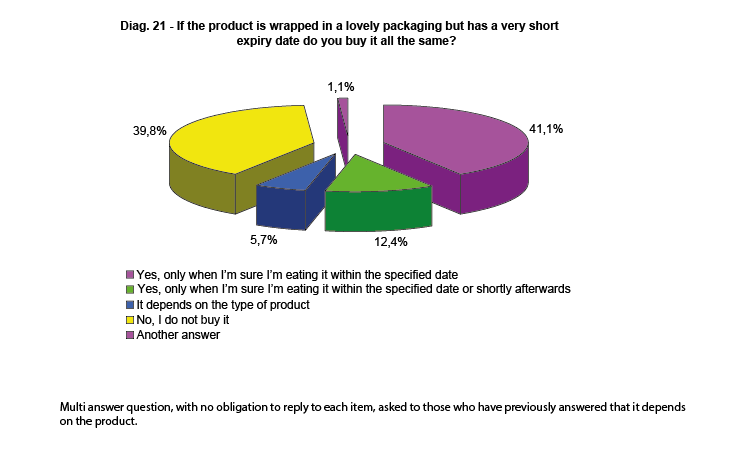
Multi answer question, with no obligation to reply to each item, asked to those who have previously answered that it depends on the product.
[/item]
[/accordion]
[accordion width=”100%”]
[item title=”The consumer behavior”]
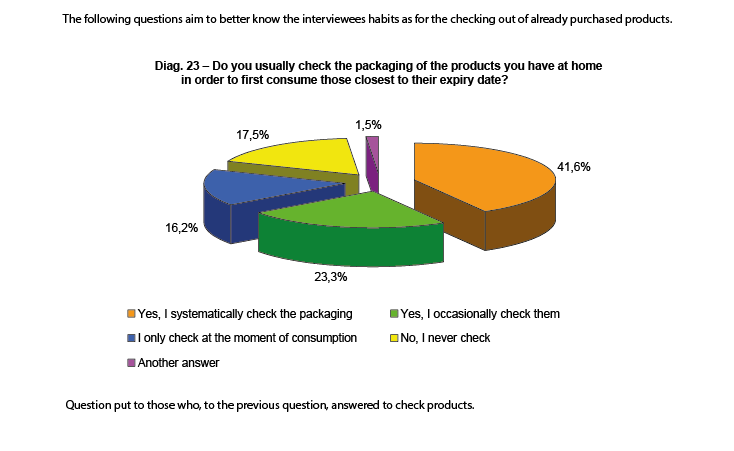
Question put to those who, to the previous question, answered to check products.
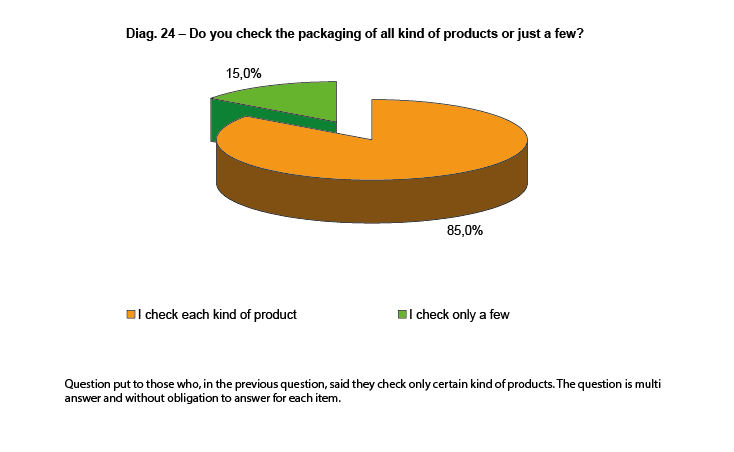
Question put to those who, in the previous question, said they check only certain kind of products. The question is multi answer and without obligation to answer for each item.
[/item]
[/accordion]
[accordion width=”100%”]
[item title=”The consumer behavior”]
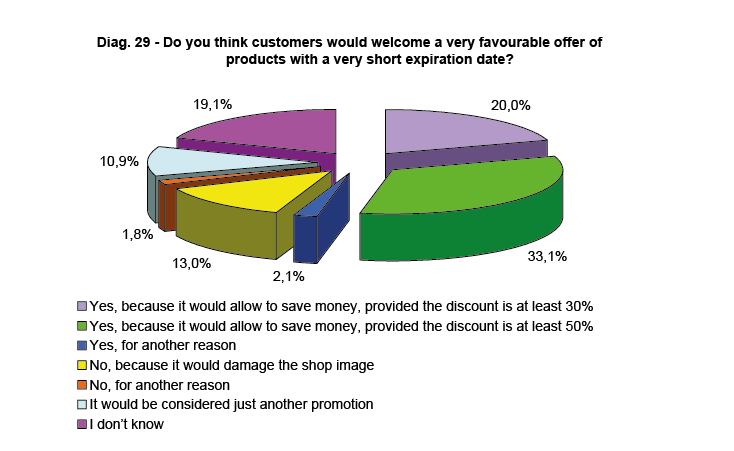
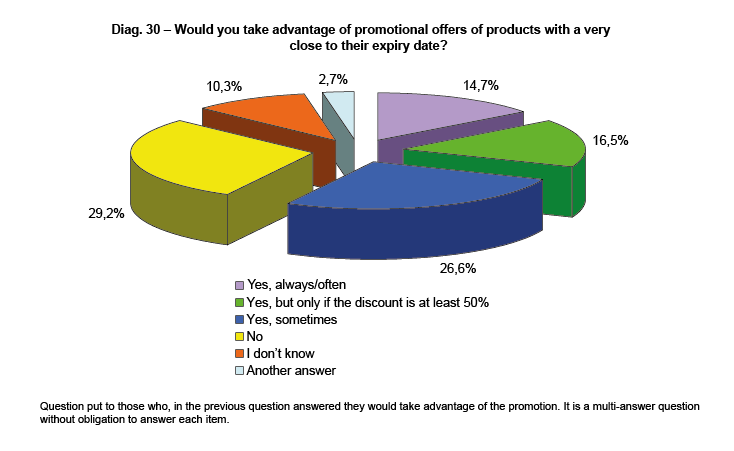
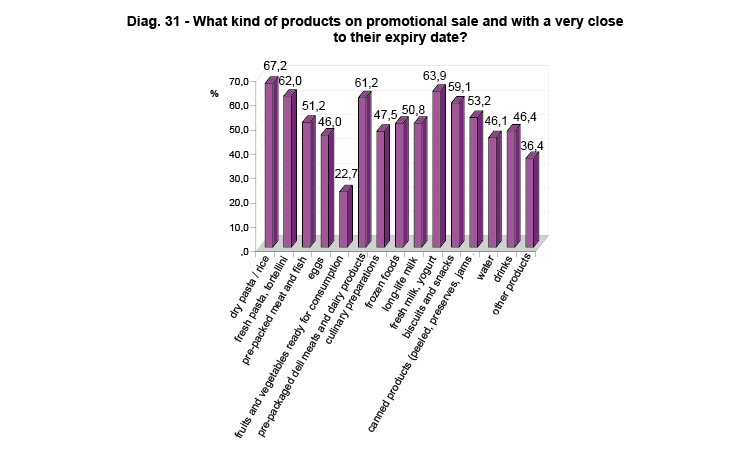
Question put to those who, in the previous question answered they would take advantage of the promotion. It is a multi-answer question without obligation to answer each item.
[/item]
[/accordion]
[accordion width=”100%”]
[item title=”Waste”]
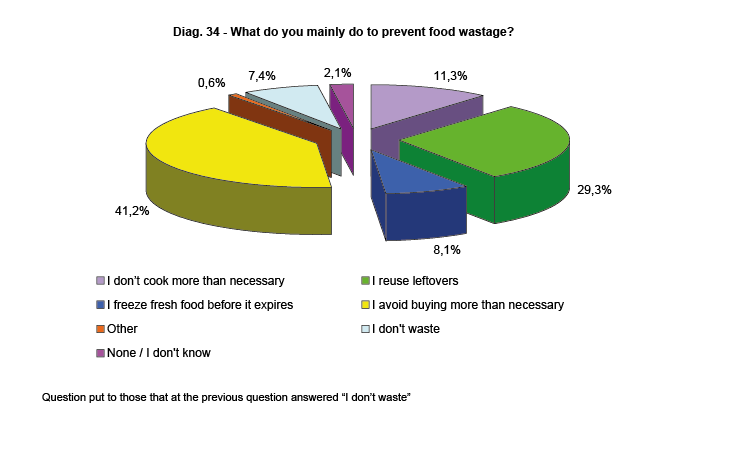
Question put to those that at the previous question answered “I don’t waste”
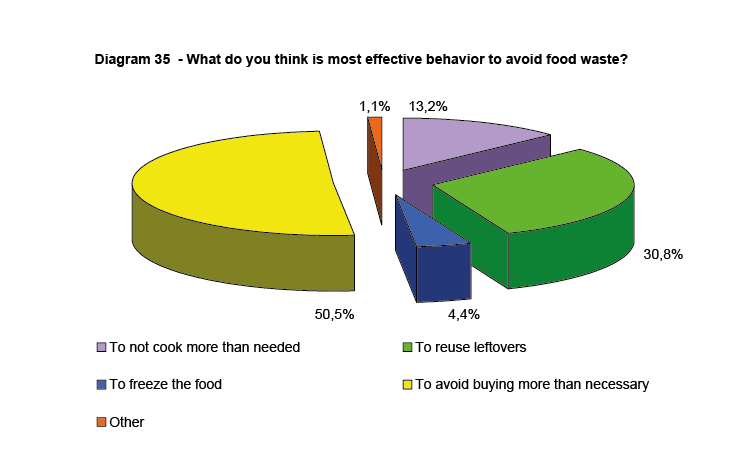
[/item]
[/accordion]
Download PDF:
 Employement status of the respondent
Educational level of the respondent
Domestic food waste: some thoughts on the survey from Piedmont and Valle d’Aosta data collection.
Maria Cristina Martinengo
University of Turin-ESOMAS (Economic-Social Sciences and Mathematics-Statistics)
[accordion width=”100%”]
[item title=”Introduction”]
Food waste has many aspects that affect all stages of the supply chain and domestic waste is one of them.
The Barilla Centre for Food & Nutrition presents the data of the relative weight of waste within the supply chain in Europe, showing that the ultimate consumer is responsible for 42% of the total waste of food and exceeds both the production (39%) both the catering (14%) and the distribution (5%).
If these data are accurate, the responsibility of the consumer is very high: the phrase that comes to mind and that we all heard from parents, grandparents, uncles when we were kids and we refused to finish our food: “For shame! You waste while there are children who die of hunger.” In fact, the amount of domestic food waste, together with over nutrition which takes away calories from the global availability, point to the individual consumer as one of the key actors in the food chain, whose more or less virtuous behaviour have an increasingly important role.
However, consumers’ responsibility moves from some assumptions: the first one is based on the widespread perception of waste as a negative value, the second one regards the consumer empowerment relying on information, knowledge and skills, and finally the third one consists in the consumer’s willingness to make a change in his behaviour, paying the price in terms of time and effort.
These assumptions will be farther discussed in the final section of this work based on the analysis of consumers’ ways and behaviours as they emerge from the investigation of both of Piedmont and Valle d’Aosta regions and from national research.
[/item]
[/accordion]
[accordion width=”100%”]
[item title=”1. Domestic food waste in Italy”]
The Waste Watcher 2013 report on domestic food waste in Italy records a yearly food waste of about 76 kilos per person, ranking below the European average; in spite of it domestic food waste costs a total of 8.7 billion Euros and € 7.06 per family each week.
Among the most wasted foods fruit (51.2%) and vegetables (41.2% ) rank respectively at the first and second place, followed by cheese (30.3%), by newly baked bread (27.8%), by milk (25.2%), by yogurt (24.5%) and deli meats (24.4%). Cooked foods are thrown away at a much lesser extent and not beyond 10%.
Knowledge for Expo and Waste Watcher have investigated, through a structured questionnaire, the causes of waste and have identified 9 Italian waste-patterns depending on the reasons that cause the waste itself.

In order to evaluate in general the Italians propensity to waste, the survey shows that only one of the waste-patterns ranks on an average of € 07.06 per week, while the total amount of waste-patterns below average is equivalent approximately to 46% of the population, and that above the approximate average is equivalent to 39%. All in all, more than half of the Italians ranks on or above the average.
A more thorough investigation of the waste-patterns identified by the research shows some interesting points.
First, the quantitatively most relevant pattern (around 35%) ranks below the average. For this segment of the population, food waste is a serious problem from a sustainability point of view, these people state that their waste is due to an objective unsuitability for use as food and not to an overproduction in the kitchen, nor to an excessive food purchasing.
The second point concerns the relationship between waste and socio-cultural resources, which shows that the growth in such resources parallels the growth in waste. To summarize, it is clear that the waste-patterns within or above the average have a medium-high standard of life but, most of all, rank high in the society ladder and actively participate in social and cultural activities.
The place below the average seems to depend on two factors: a strong value-based orientation stating a high value on sustainability, a inducing a behaviour aimed at reducing food waste, or the social-economic marginality that often accompanies old age and that “forces” sobriety. Moreover, eit is necessary to point out that low-income accompanied by an advanced age rifer to a population characterized by a degree of marginalization compared to contemporary ways of social life and consumption and, at the same time linked to traditional models, whichalso provide the skills and the “knowledge” suitable to reduce waste.
The economic crisis that is affecting our country has contributed to the progressive reduction of food waste, as appears from the survey of both the Knowledge for Expo-Waste Watcher and the one that Coldiretti presented at the end of 2013 to the World Food Day. According to Coldiretti, the crisis has led to a positive trend in the reduction of waste and caused every Italian to reduce the amount of food thrown by 25% over the past five years.
The influence of the crisis, a widespread environmental awareness and the attention that the media have focused on food waste in recent years seem to be leading factors in affecting the Italians behaviour, together with the development of information and educational strategies.
[/item]
[/accordion]
[accordion width=”100%”]
[item title=”2. The survey of Piedmont and Valle d’Aosta”]
Piemonte and Valle d’Aosta have conducted a statistical research on food waste within their boundaries, directed by Professor Anna Lopresti, investigating both the purchasing and consumption behaviour and the level of information and strategies to reduce domestic food waste
2.1. Purchasing and consumption behaviours.
Food expenses can be shared according to the products characteristics among: fresh products such as bread, fruit and vegetables, dairy products, deli meats, meat and speciality foods, and “food pantry” items.
The purchase of fresh products is more frequent and can take place from a daily to a weekly basis but it is clearly affected by the lifestyle, work and personal commitments. Only the bread is purchased with a daily frequency of approximately 30% while fruits, vegetables and other fresh products do not exceed 7%. For fruit and vegetable the weekly purchase reaches about 36% and for dairy products, meat and cold cuts about 40% and some of these products need to be cooked ore stored in particular way not to be, at least in part, wasted.
For products from the pantry, however, the largest group of respondents (about 41%) makes a weekly shopping, followed by (30%) who buy them once a month.
Once put in the pantry, these products need to be monitored to avoid wastage due to their expiry by simple oversight, but respondents who claiming to check them are systematically less than half of the interviewees (about 42%), compared with 23 % that check them from time to time, about 16% that checks them just before consumption and about 18% that never check them.
2.2. Purchasing and mechanisms of persuasion.
One of the main accused of domestic waste is the large-scale retail sale offering large quantities of discounted foodstuff: special offers, lowering the price by increasing the amount, are accused of persuading consumers to buy goods they won’t be able to consume and thus to promote waste inciting a buying spree through the allure of a “good deal”.
The survey made by the region included two questions: the first one relating to the planning of purchases based on discounts and promotions, and the second on the actual purchasing behaviors. Almost 36% of respondents stated that they always or often plan their food purchases depending on promotions, compared to about 42% which rarely or never do it; about 18% said they always or often buy oversized packages being bargain-priced, roughly 44% sometimes or rarely do it, and 38% claims never to do so.
Judging by these answers people from Piedmont and the Valle d’Aosta are basically virtuous consumers, mindful of the convincing ways of retail chains and disinclined to be influenced by them.
2.3. Information and behaviors.
The data on the level of information of the surveyed population and on their consequent behaviours are not, however, entirely congruent with the aforementioned picture.
The first data concerns the awareness of the information on the food labels on the packaging: more than one fourth of respondents have never noticed that on some displays the word “Use by …” and others “Best before …”.
Among those who do have noticed the difference, about 10% say they do not know what “Use by …” means, almost 30% state they know but have no idea of the exact meaning while around 62% understand it correctly.
Similarly, among those who have always noticed the difference, about 10% do not know the meaning of “Best before …”, while 27% think it means that the food may have lost flavour or aroma, about 23 % believe it might have lost nutritional value and 18% that it can unsafe if consumed past the use-by date indicated on the package. To summarize, approximately half of the respondents correctly interpret the wording on the labels while the other half does not know or doesn’t understand it incorrectly.

It is interesting the relation between the educational level and the ability to distinguish between the two aforementioned wordings: the higher the educational level the better the information level, so much that respondents with low education are divided between those who noticed the difference (approximately 60%) and those who didn’t (40%). On the contrary, almost 90% of respondents with a high educational level noticed it against a 10% of those who didn’t. The correct interpretation is linked to the educational level too; with regard to the wording “Best before …”, almost 70% of respondents with higher levels of education knows the exact meaning compared with a little more the half of those who have low levels of education. This leads to a seemingly paradoxical observation: housewives, experienced in food purchase, preparation and storage, fall under the category of those people ignoring the mere existence of two different wordings on food packaging.
The level of information does not immediately translate into behaviours aimed at reducing waste: only two-thirds of the population always or often check several packages to choose the ones with the farthest expiration date, less than a half verify the word “preferably/best..” while nearly a half only checks the expiration date. Moreover, a little more than half of the respondents buy food in see-through packages allowing to check the content when the expiry date is close, while about 40% won’t buy them anyway, regardless of using up time.
The propensity to buy products with a short shelf life is strictly linked to the willingness to take advantage of promotions and discounts related the food durability. The surveyed population is divided almost in half between those who would take advantage of these offers (53%) and those who do not(40%).
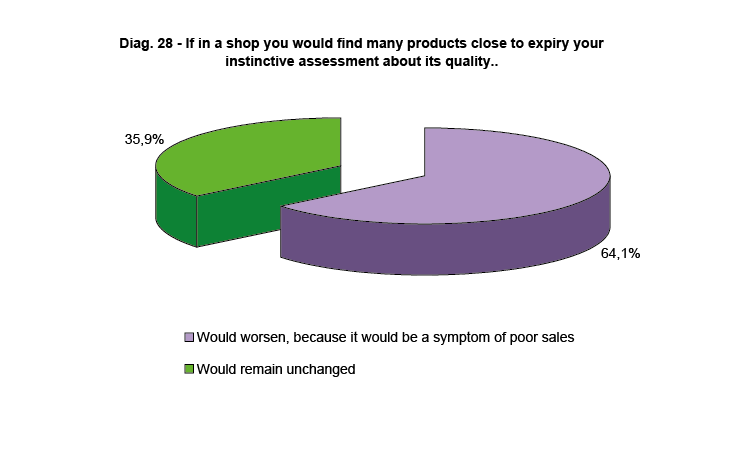
Incidentally, it is interesting to observe that the presence of many products close to their use-by date project a negative image of a shop. 64% of the people from Piedmont and Valle d’Aosta state that the image a shop would suffer if the shelves were crammed with foodstuffs close to expiry as it would hint at an occasional stock turnover or at a too limited clientele.
2.4. Self-production and consumption.
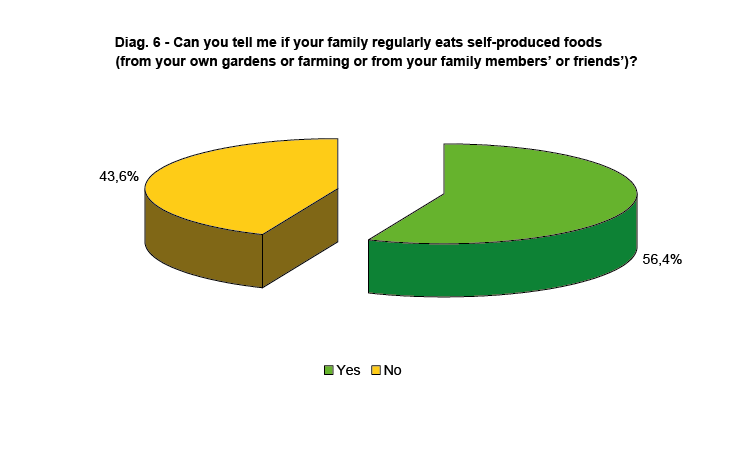
Just over 56% of the respondents claim to consume self-produced food regularly or food produced by friends and / or relatives. It would be interesting to further inquire into the matter to understand how this food is distributed in terms of self-production and benefit from others’ production and in terms of size; this is just a starting point of consideration on the crisis impact and the strategies to cope with it.
It is possible to compare the data on the Piedmont and Valle d’Aosta with the Italian one, which comes from the most recent survey by Intesa-San Paolo and Einaudi Center on Italian savings and financial choices (2013). According to this survey just over 30% of Italians have produced part of those goods and services they used to pay for and have added spending cuts to this strategy, in order to withstand the crisis. Anyway, the importance of self-production does not add much to the reflection on the food waste: even the self-produced foods may be wasted because of overproduction, as well knows everybody who tends one’s own garden, or because of bad preservation and/or other reasons.
2.5. What is the waste and how to reduce it.
About three-quarters of the population interviewed believe waste consists in the non-consumption of still edible food, but slightly more than 40% of the people from Piedmont and Valle d’Aosta consider as wasted all the food gone bad and thrown away, while one fourth of the population think about the surplus destroyed by the same producers. Most of the responsibility for waste (from supply chain and domestic) is attributed to non-consumption, which invokes the consumers’ ethical duties. In addition, the respondents’ perception of Italians bent for waste is very negative: about half say they do not know how to answer, but approximately 36% believe that Italians are wasting more than 200 grams of food per person every day.
The strongest measures taken to avoid wastage are mainly three but the majority of responses concerns the avoidance of buying more than needed; to follow, almost one third of respondents claim to reuse leftovers and slightly more than 10% say they avoid cooking more than necessary.
.
[/item]
[/accordion]
[accordion width=”100%”]
[item title=”3. Some ‘food for thought’ on domestic waste”]
In 2012, the publisher Laterza published a volume by Emanuela Scarpellini titled “AT TABLE! Italians in 7 lunches”, whose reading is very useful to frame and understand the issue of food waste.
In addition to a detailed analysis of the Italians food consumption from the late 1800s to the present day, the author describes 7 meals typical of as many periods and different social classes: a meal of the nobility in the years of construction of the unitary state, a peasant meal in Cuneo province at the end of 1800, a dinner within the working class in the years preceding the First World War, a lunch during the fascist autarky, a labourer’s meal during Turin economic boom, a lunch of small entrepreneurs in the rich Northeast Italy in the ‘970s-‘980s and a meal of a small family of intellectual workers in the early 90s, when some consumption trends that still affect food – local interests, naturalness, tradition, health consciousness – begun to take shape. Finally, are set forth two different scenarios for future lunches, one inspired to the prevailing technology and chemistry, and the other to the affirmation of tradition and to the typical and seasonal characteristics of food.
Those who wanted to run through the book focusing on the description of the 7 meals would be immediately hit by some aspects relevant to the discussion on food waste.
The first aspect is the gradual increase in the amount of food consumed during meals, up to the peak of the economic boom to be reduced in the following years in favour to a growing attention to their quality.
The second aspect is the growing capacity of many pantries, which relieves us from the need for daily purchases and offers choice options as for food consumption.
Finally, the third is the change from an almost exclusively vegetarian diet to one rich in protein and milk and dairy products, meat and fish.
Summarizing, we are facing overabundance: in terms of food quantity, of nutrients aplenty, in variety of one’s food available choices.
This very word, abundance, is the interpretative key to food waste, where waste is a sort of necessary relapse into food overabundance: looking for and attaining ‘abundance’, as was the case for Italians during the country’s economic development, implies and “contains” waste, which, is reduced wherever there is sobriety or scarcity.
To support the combination of abundance / waste have concurred some events of economic, social and cultural nature.
The first one was theindustrial growthaccompaniedby the process of urbanization: in the years of thriving economythe abandonment of the countryside and the search for a wage,guaranteed and increasing in the industrial city,favoured the emergence of a model of consumption aiming at outgrowing localism and the communal system,tofoster a “citizenship” to the new industrial world and to the wider society which brings together the most advanced countries on the basis of sharing similar properties and constitutive of the same lifestyle.
The assertion of a consumption model based on citizenship, i.e. on the affiliation to an industrial society, whose most desirable example wasthe American society, brought abouta process ofmerging oflifestylesand values within the Italian population, spreading a stereotype held by social desirability coinciding with the city, with the industry and with their possessions.
The industrial city offered the possibility of satisfying new needs of the population, needs the traditional contexts could not cope with. So, took shape a process of anticipated socialization with regard to the urban-industrial society, whose contexts and lifestyle were most desirable, not only for immigrants, but also for those who were about to move and those who remained in the South or in the countryside, which facilitated a rapid dissolution the traditional lifestyle and cultural models.
The diet underwent a radical change, going from scarcity and a limited variety of food to a protein rich and diversified regimen (in 1968 is exceeded the average threshold of 3000 calories a day) whose symbols are meat and sugar, almost absent from country diet and whose consumption was limited to the festivities.
Over the years of rapid growth major food expenses regarded industrial products with lower prices but better satisfying the demands of social and cultural changes: not only to the, physical and cultural abandonmentof the countryside, but also to the increased presence of women in the labour market. The “intermediate products” such as stock cubes, tomato sauce, preparations for desserts, frozen foods, along with ready-to-eat products such as canned foods or sauces, are helpful to modern women who have little time to devote the kitchen and little memory and knowledge of traditional recipes.
The gradual change of women’s role represents the second significant event at the basis of the combination of abundance / waste. The increase of female work outside the home makes it necessary to reduce the bulk ofhousework, within which takes place the home consumption related work. Reducing the purchasing frequency, filling the pantry, using intermediate food products or ready-to-eat foods, cooking large quantities, are almost a requirement for women in dual-career and help lift the weight of the many and various household tasks.
Finally, the third event is cultural in nature and relates to the symbolic aspect of food and the pursuit of abundance. Abundance is statusostentation, as taught by Veblen about the conspicuous consumption of the wealthy class; it is welcome and sociability, promotes conviviality, it is recognition of the status of the other and, finally, is transgression compared to the daily life of penury and poverty, as shown by studies on traditional peasant festivals.
The period of economic development and pursuit of abundance conquered by large sections of the population is followed by the years of Post-Fordist society,when takes root an economy based on mass production of a wide variety of goods in a wide range. From the consumerpoint of view, this economy in its diversity offers an unprecedented freedom of choice, true or illusory might it be. Although this freedom surmises abundance, with its backsliding in terms of waste. The fulfilment of desires and their incessant new onset implies the availability of goods that must be available and consumables hic et nunc (here and now). The opening of the refrigerator or pantry and instant access to different foods, fresh or preserved, cooked or not, is an example of how the satisfactionof a momentary wish needs of abundance and as, of course, the available abundance, may easily generate waste. The economic and social crisis that our country is going through has partly questioned the mode of consumption related to this economy of variety because of two reasons: one economic and the other value-based.
On the one hand, the limited economic resources have led some people to give up abundance to pay more attention to waste; on the other hand new values, such as sustainability, consumption ethic, sobriety, have involved the circle of consumption, so much so that some scholars have suggested an irreversible change in the consumption pattern towards what has been defined as “post-growth “, meaning the abandonment of the consumerist lifestyles of years of growth and those following.
According to Fabris, waste as a negative value gives us a measure of the post-growth, along with environmental sustainability, ethical consumption and the abandonment of the logic of possession in favour of that of access.
The aforementioned survey Knowledge for Expo-Last Minute Market confirms some of the changes solicited by the post-growth model. As environmental awareness grows, the issue of food waste is more relevant to the population: 90% of Italians consider it very or fairly serious, almost 80% state their concern about this and almost 90% shows a desire for more information on the consequences of waste and on the ways to reduce it.
The general behaviours seem to be changing too, almost 60% of the Italians claim they hardly ever throw leftovers and many find ways to reuse them.
National data show consumers growing awareness and a general interest in the waste topic: certainly, putting thought into action is difficult enough and find hindrance both within the most common and desirable consumption patterns, and in the settled daily habits.
A final deliberation concerns precisely those particularly heavy hindrances to the spread of more sober and heedful behaviours.
The first one could be described as the negotiation between freedom and duty; as already pointed out the economy of variety favours freedom – real or illusory, where the consumer can choose how to satisfy his desires at any time. The ethical duty entailing respect for food and for the environment and the people, objectively is a restriction to that freedom.
The survey carried out by Knowledge for Expo- Last Minute Market gives us a perfect example of such restrictions, showing how an active lifestyle, stretching out beyond the domestic walls, encourages wastage. Going often out to lunch or dinner when the mood strikes, or following the dynamics of social relations, starts on household supplies in an unplanned way leading to the spoilage of many foods to the point they are no more edible or their edibility becomes reduced. Avoid wasting, in this case, means to give up what you want in the name of an ethical principle and eat the purchased foods. This is the reason why we used the term “negotiation”: it comes to negotiating with ourselves deciding what is most important, the egotistical satisfaction or the respect for food.
The second aspect relatesto what has already beenmentioned in the first paragraph of this work on the relationship between social inclusion and food waste. The higher the economic, social and cultural resources the busiest the social life, and the more frequent the leisure activities the bulkier is the waste. It has already been said that, in this case, waste represents an almost necessary reduction of consumption in favour of other expressive, recreational or cultural activities chosen by large shares of the population. Unless there is an already strong sense of ethics to guide one’s search for a sustainable path, leading to a revision of one’s personal hierarchy of values.
Finally, the third aspect pertains to how gender affects the processes and distribution of consumption.
An ISTAT survey on time use and gender roles, conducted in 2012, shows how virtuous behaviours aimed at reducing domestic waste are still largely ascribable to women and to the way female roles are handed down. Within the Italian families kitchen related activities are carried out by women in 97% of cases while goods and services purchasing in 60%. The same survey shows that, within families, daughters’ contribution to household activities is higher than that of fathers.
Today the reduction of domestic waste passes mainly through women and the women themselves are more conscious of their empowerment as consumers, as pointed out in a recent survey conducted by CERMES-Bocconi, entitled “Women who fight crisis “. Two significant issues of domestic waste come out from this research: the first one concerns women’s awareness of their being “one step ahead”, with their knowledge and experience to face the crisis; the second is a request to lighten and simplify everyday life. These two issues depict an ambivalence between confidence in one’s self and capability and the strain induced by housework overload and responsibilities. Certainly, women seem willing to take on more responsibility in a time of crisis, both in terms of housework and consumption, but sure enough, the weight of women’s activities should be reduced to slow down the marginalization of women themselves.
.
[/item]
[/accordion]
[accordion width=”100%”]
[item title=”4. Conclusions: what policies against waste?”]
The “what to do” about the reduction of domestic waste concerns many actors: production, distribution, consumers and finally the institutions and associations operating on dietary education and responsible consumption.
All the players in the game can bring about ways to reduce food waste: among others, the use of production surplus, promotions and discounts on products close to their expiry date within distribution channels, etc..
Still, the focus of the already mentioned national and regional surveys is the consumer. As previously said responsibility weighs down the individual consumer, who, according to the Knowledge for Expo survey, has heightened his awareness on the issue of food waste and, in general, is asking for more information, especially through the improvement of labels and the request for a better knowledge about the environmental and economic impacts of the problem. Many people believe the school system should take it upon itself to bring up young people to fight against waste.
A minority agrees to other measures such as making smaller or bigger packages, levying a tax according to the waste produced and increasing the food price to force waste reduction.
As for the measures mentioned above it is of some interest the respondents’ actual attitude towards waste. In general, it appears that with the increasing of both household and individual waste increases the request for measures, even coercive ones, to reduce waste: grows thus the demand for guidance with the exception of the wasteful ones, who instead require detailed, more informative labels, assuming responsibility for their own actions. Conversely, those who are more frugal either because of their social marginalisation or in the wake of ethical and environmental expectations, demand for educational and formative policies aimed at a higher level of environmental awareness and a change in consumption patterns.
The precautions reported by consumers are consistent with those expected, encouraged or implemented by various institutions, European or local, and some associations working on information and pushing, both politically and within production and distribution, for ways to reduce waste. Following the growing interest for food and cookery and using it to spread values, Coldiretti has launched a project designed to convey some traditional and local knowledge on the reuse of leftovers.
[/item]
[/accordion]
[accordion width=”100%”]
[item title=”Bibliographic references”]
Barilla Centre for Food & Nutrition, Food waste: causes, impacts and proposals, 2012.
CERMES-Bocconi, women who fight the crisis, Milano, 2013.
Coldiretti-SWG, The behaviour of Italians in times of crisis, in 2013.
INTESA-Sanpaolo, Centro Einaudi, Survey on Italian savings and financial choices 2013.
ISTAT, Time Use and gender roles, topics, n. 43, 2012.
Knowledge for Expo 2013 report on domestic waste, 2013.
[/item]
[/accordion]