
The limits and contradictions of a system
Some people believe that the current legislation on food use-by dates is more harmful than beneficial.
Their reasoning is based on the following aspects:
- the whole system is based on the discrimination among the interests to safeguard health on the one hand, the integrity of the product quality on the other. Health defense is granted by the obligation to point out the use-by date on the product label; while ‘best before’ is used to safeguard the product quality and characteristics. Unfortunately, the consumers’ majority misunderstand the difference between the two date markings;
- the products’ durability is not established by any regulations, it is referred to the food producers instead, according to their autonomous evaluations. However, this admittedly means that the products’ durability evaluation submits to the company convenience, so the expiry date might be brought forward to avoid the threat of food poisoning (and the damage to the company image) or to ensure a fast turn-over of the goods and therefore high levels of production.
These two factors contribute significantly to make the expiration dates the leading cause of food waste at the stage of final consumption and undermine the overall credibility of a system that seems to care more for the companies than for the people and the planet they live on’ (Tristram Stuart, Waste p. 69).
More than half of the consumers in Piedmont and Valle d’Aosta does not know the meaning of ‘best before‘.
Source: ‘A Good Opportunity’ statistical survey 2013 by UNITO
The meaning of the wordings on labels
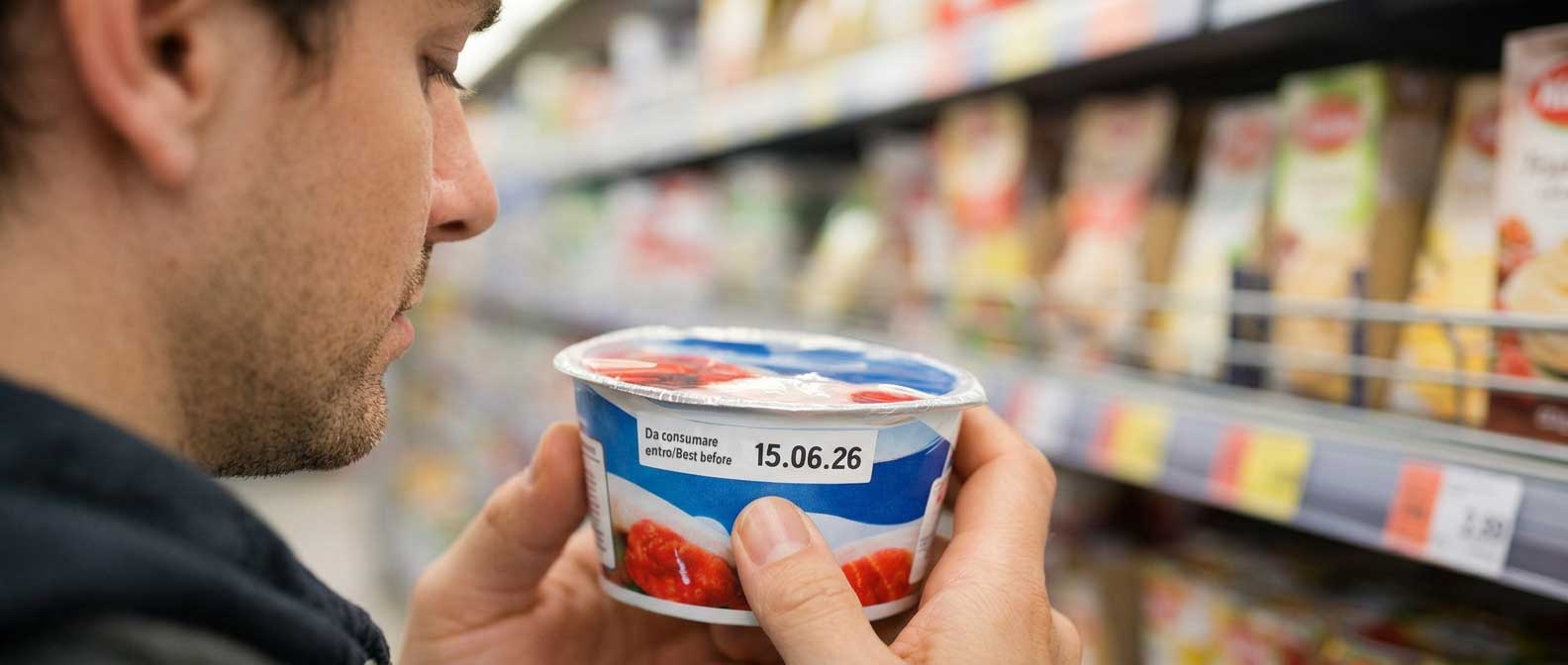
The minimum durability of the product expressed by the wording ‘best before‘ is the date within which the food retains its quality and specific properties, provided, of course, it has been properly stored.
Coffee, for example, if drank after the date indicated by the minimum durability of the product could have lost (in whole or in part) its aroma, the shortbread cookies might be less crisp, a fizzy soft drink might lose their fizz.
Assuming a pre-packaged product has been properly stored, the farther behind is its best before date the quicker will be the loss of characteristics such as fragrance, softness, smell, savouriness, flavour, colour, crispiness, crispness, texture and so on without, however, having become dangerous for the consumer’s health.
DATE MARKING INDICATION
It is indicated by ‘best before’ followed by the date expressed in terms of day, moth and year, or with ‘best before end’ in the other cases. The indication ‘best before’ might be followed either by the date or by a reference to where that information does appear, e.g. ‘see cap’.
The minimum durability for storage bears the indication of day, moth and year, in that order, and can be expressed depending on the shelf life of the food according to the draft in the following Table 1

ANY FURTHER INDICATIONS
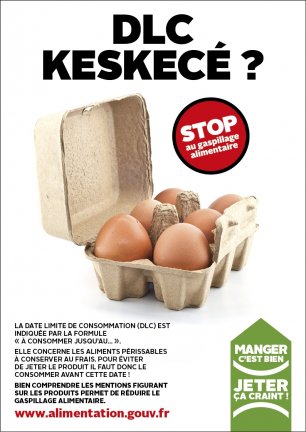
If, in relation to the characteristics of the product, special care must be taken so that it can be properly stored until its term, or when particular storage requirements are defined by specific regulations, the indication of the SMD (minimum durability for storage) must be followed by storage instructions.
Foods that do not require the indication of a SMD (acronym for minimum durability storage)
The legislation currently in force establishes that the indication of minimum durability for storage is not required for the following products:
- fresh fruit and vegetables, including potatoes, which have not been peeled, cut or which have not undergone similar treatments; this exception shall not apply to sprouting seeds and similar products such as legume sprouts;
- wines, liqueur wines, sparkling wines, aromatized wines and beverages obtained from fruits other than grapes, as well as certain drinks made from grape must;
- beverages containing ten per cent or more by volume of alcohol;
- soft drinks, fruit juices and nectars, alcoholic beverages placed in individual containers with a capacity exceeding 5 liters, intended for supply to mass caterers;
- bakers’ or pastry cooks’ wares which, given the nature of their content, are normally consumed within 24 hours of their manufacture;
- vinegar;
- cooking salt;
- solid sugar;
- confectionery products consisting almost solely of sugars and / or sweeteners, flavorings and colorings such as candies, sweets and sugar confectionery;
- chewing gums and similar chewing products;
- individual portions of ice cream.
Expiration date
The expiration date, expressed by the words ‘use by‘ is used to indicate the durability of pre-packaged foods, which may become hazardous for human health if not used by the stated date, usually because of microbiological spoilage (i.e. fresh milk and yogurt).
The wording ‘use-by’ followed, in this case as well, by the date or by the reference to where that information does appear (e.g. ‘see cap’). With regard to the ‘use-by’ date, which is expressed in terms of date, month and year just in case, it comprises the indication of storage conditions which need to be observed and, should it be established, storage temperature for the determination and extension of its shelf-life.
Download PDF for more information:
38.1% of consumers in Piedmont and Valle d’Aosta does not know the meaning of ‘use by’
Source: “A Good Opportunity” Statistical Survey 2013 by UNITO (University of Turin)
Who sets the durability
As already mentioned at the beginning of this section, the durability of packaged foodstuff is established by the manufacturer, the packer or, in the case of imported products, by the first seller identified within the European Union.
The term is applied under their direct responsibility and, therefore, can be given different dates for the same food. That may depend on autonomous business choices, as well as by different production methods, different packaging, and different treatments undergone by the product, ingredients and so on.
There are, however, exceptions related to the time of expiration of certain products:
- fresh milk products;
- fresh cheese;
- fresh pasta;
- fresh meat;
- fresh fish products.
With reference to these types of products, thanks to the technological and scientific development, the Ministers of Industry, of Agriculture Forestry and Health policies can set out expiration dates. Highly perishable products constitute the exception that justify the transference of responsibility for dates fixing from the individual producers to the public authority, this to warrant the protection of human health.
Download PDF for more information:
A look at the world
Not all the world is country.
In the United States there are no federal laws that force to underline the expiration on the labels of food products, except for some baby foods. The government prefers to focus on people education in how to treat food safely. Wasn’t it for the fact that in some States the indication of the expiry date is mandatory, this general attitude should be considered common sense revenge on the law authoritarianism. Even in Europe we begin to see the first signs of intolerance of the highly questionable effects resulting from the expiration dates system. In Greece, a recent regulation has allowed the selloff of products whose (TMC) minimum durability date was already expired, provided it didn’t exceed a given period. Italian press wrote about this with ‘compassionate’ sarcasm, as if it were the last resort to feed the ‘hungering’ people. Actually, considering that in Europe there is no ban (except for eggs) on selling foods past their minimum durability date (bur of course there is for those products past their use-by date), this seems to us, in light of what has been pointed out in this section, a quite reasonable and shareable measure.
Download PDF for more information:
In Massachusetts is opening within some few days DAILY TABLE, the first store exclusively dedicated to the selloff of expired foods and pre-made meals cooked with expired food.