
Water Wastes and Waste’s Water…
A word’s game to highlight the two reasons why we face the theme of water.
- The first one is that wasting food means wasting the water used to produce it and knowing the amount of “invisible” water contained in the food we throw away could prevent us from wasting it.
For instance, if people knew that we need 15,000 liters of water to produce one kilogram of beef, they would put an effort into not throwing the leftover meat and they could reuse it to cook meatballs, meatloaf or any other recipe they may invent. - The second reason is that it doesn’t make sense to worry about closing the tap water when we brush our teeth (saving a few liters of water) and then be indifferent to the enormous water consumption caused by our food choices (thousands of liters a day).
Going back to the previous example, knowing the surprising data of the “virtual” water contained in a pound of meat could lead some people to eat less meat and others to avoid it completely.
Making the way we relate to food sustainable doesn’t mean only battling waste, but also choosing a diet that involves a withdrawal of water resources compatible with their specific availability.
The water that is gone
The most recent annual reports of the World Economic Forum show that, in the rank of global risks, the water crisis always ranks high in terms of probability of occurrence and severity of its possible effects
This prediction was recently confirmed by two of the world’s leading experts of hydrological systems (Mekonnen and Hoekstra) in a study that shows that water scarcity is a problem widely underestimated. In fact, today there are about 4 billion people already suffering from lack of water for at least one month a year, while 1.8 billion have to deal with drought for at least six months a year.
The question we must answer is why does water start to run low in larger and larger areas of the world, despite the water cycle on the planet should ensure a balanced water budget between water output and input?
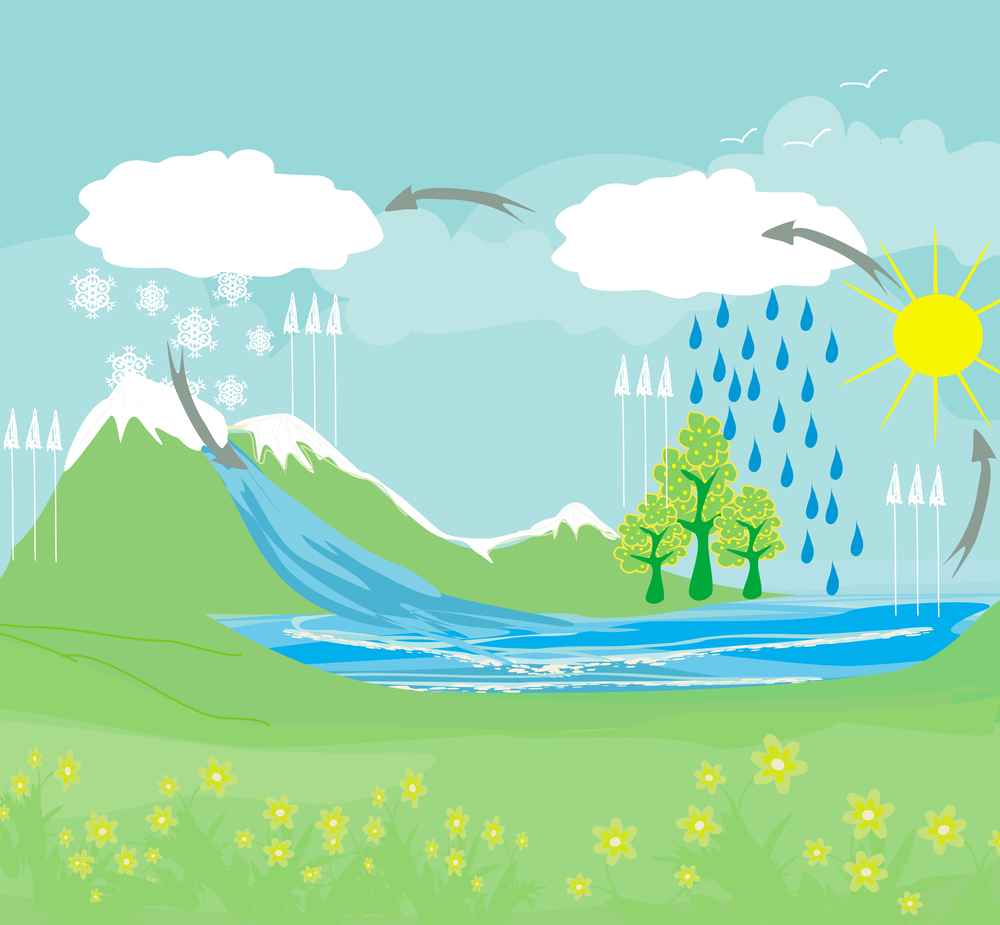
Image from “Storie di acqua” – © Sanpellegrino 2016
There are two answers
1. Water demand is growing
The demographic and economic growth leads to an excessive consumption of water and that prevents the charging of water reserves (level of groundwater, river flow, etc.).
Among the causes of this growth of water demand in the world, a crucial role is played by the demographic dynamic. The estimates indicate that the global population will increase to more than 8.5 billion people by 2030, reaching nearly 10 billion by 2050.
This will require an increase of at least 20% in water consumption in order to face an increased demand for food (which may touch the +50% by 2030 and +70% by 2050)
Another cause is the economic development. The improvement of social and life conditions of the population in developing countries goes along with changes in eating habits and, with higher amounts of calories consumed (just think that in the last twenty years, meat consumption has more than doubled in China and by 2030 it will double again). This determines an increase of water resources extracted, because the production of meat, milk, sugar and vegetable oils requires a larger amount of water than the production of cereals.
Considering that today many areas characterized by a sampling rate of water resource exceeding 20% are considered at risk, the predicted scenario for the years to come, without a corrective action, appears dramatic.
Furthermore, the economic development also implies an increasing pressure on available water resources relatively to the increasing global demand for energy which is related to.
Referring to hydroelectric power and to the energy produced from biomasses, we expect a 60% and a 30% increase, respectively, on the current values by 2030.
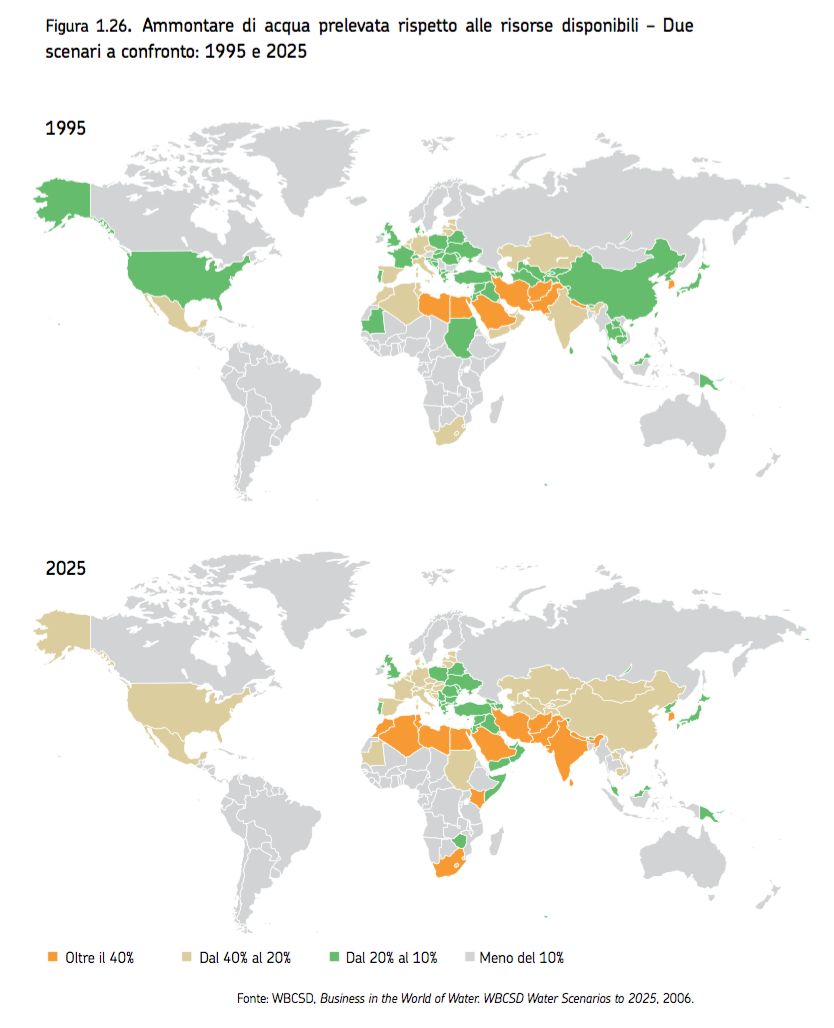
Image from “Eating Planet” di Barilla CFN
Furthermore, the economic development also implies an increasing pressure on available water resources relatively to the increasing global demand for energy which is related to.
Referring to hydroelectric power and to the energy produced from biomasses, we expect a 60% and a 30% increase, respectively, on the current values by 2030.
2. Decreasing water availability
Pollution and climate change combine to limit the possibility of water use.
The main cause of the reduction of water availability is the pollution, that threatens the quality of water resources.
Some data explain the size of the phenomenon: it is estimated that, every day, two million tons of waste generated by human activity are discharged into waterways. The contribution of food production of pollutants to the water reaches 40% in developed countries, and even 54% in those developing. In the latter is the fact that 70% of industrial waste is discharged into waterways without undergoing any purification treatment, thus contributing to the pollution of the available fresh water resources.
Another factor that begins to have a significant impact on the availability of water resources is climate change.
There is now a broad consensus about its effects on the water and its availability: projections show an overall reduction of rainfall in the semi-arid areas, an increase in temperate zones, greater variability in rainfall distribution, greater frequency of extreme events and a general increase of temperature.
n particular, it provides a strong reduction of surface runoff of the rivers and the refeeding of aquifers throughout the Mediterranean basin. We must add to this the salinization of coastal aquifers due to rising sea levels and lower soil absorption capacity caused by increasingly frequent rains characterized by strong intensity.
But how much water we have in Italy?
Italy is a country rich in water (especially in the North) but it is also a country that consumes vast amounts of water (significantly above the EU average) in terms of overall water footprint and individual consumption.
Severe water stress phenomena have occurred, most recently, in the Po basin, the most serious of which (2003) caused power outages due to the impossibility of the most important Italian powerhouse (the one in Porto Tolle, province of Rovigo) to draw from river Po the water required for the cooling of equipment.
The prospects are not encouraging since global warming will cause unfavorable climatic trends (increases in temperature and decrease in rainfall, according to CMCC – Euro-Mediterranean Center on Climate Change), while plausible dynamics birth/mortality and migration will result, according to ISTAT, an increase in population and thus an increase in water demand.
All these and other factors meant that WRI (World Resources Institute in Washington) places Italy among the countries exposed in the medium term (2040) to the risk of severe(high) water stress.
Water Footprint
“The water footprint of a product is the volume of freshwater used to produce it, measured along the different steps of its supply chain.”
The concept of water footprint is an indicator referring to water use in consumer goods. The concept is similar to the ecological footprint and carbon footprint but, instead of soil consumption and use of fossil energy, it refers to water.
Contrary to our common sense, however, the water is not all the same. There are three types of water involved in the production of agri-food goods (and not) and entering the water footprint calculation.
The colors of water
The blue water is the water of the lakes, rivers and underground aquifers. It can be derived from renewable sources that are recharged by rainfall and snowmelt or groundwater can be extracted from non-renewable fossil aquifers. It is easy to access and transport and can be measured, contained in dams, stored, pumped in water networks to meet the needs of different sectors (agricultural, industrial and domestic). Globally, 70% of this water is used for irrigation (FAO – AQUASTAT), but in some countries, even very dry (as Middle East or North Africa), this water use can exceed 90% of total consumption.
The green water is rain or snowy water that does not become blue water, as it evaporates or it is transpired by the plants. It is almost exclusively used in agriculture and it meets the requirement for an 84% stake.
The grey water is “polluted” water, used to dilute contaminants in the production process and it is not reusable. So, it is not a source of water for human use.
The water footprint of a product is a geographically sensitive and explicit concept, it let us measure the consumption of water needed to produce a good in different geographical areas. For a same food product, in fact, the water footprint varies greatly from place to place, depending on factors such as climate, agricultural techniques adopted, the yield of crops, the abundant availability of rainwater or the need to use water irrigation, ecc.
The sustainability of the water samples required to produce a food is very different depending on where and how this food is produced, because the amount of water needed to produce may not be the only variable, but also the “quality” of ‘ water used (if blue or green) and the possibility that it is subtracted (in a situation of poor overall availability) to main uses (in particular for domestic use).
The example of an orange (litres per orange 200 grams)
| Type of Water | Italy | Morocco | Spain |
| green | litres 56,8 | litres 44,4 | litres 44,6 |
| blue | litres 8,2 | litres 59 | litres 32 |
| gray | litres 9,8 | litres 7 | litres 11 |
| Total litres | 74,8 | 110,4 | 87,6 |
Towards a new water colonialism?
The analysis of the volumes of water consumption for agriculture (80-90% of the total water used to meet the needs of man) and of the virtual water flows generated by the swirling trade of food products allows to reveal a huge market size remained hidden until now: the one of water which is (invisibly) transferred from areas where food is produced to the importing regions.
Following the economic law according to which the market is able to regulate itself, should result in a more efficient allocation of production of high water footprint foods in the most water-rich countries that would export them to countries with lower water availability and this ones, in turn, would be able to use their water allocations in an alternative way.
Real things are often different from this scheme, in fact Italy’s situation demonstrates just the opposite.
Our country is one of the first in the world for net import (import -export) of virtual water and it is curious, in particular, noting how the water balance towards the African continent is in large deficit despite limited water availability that characterize the continent . The solution comes from the fact that the cost of water represents only a small part of the full production costs and that the water is not normally traded at market prices.
Take for example the beans grown in Kenya imported by Italy because competitive with its ones. Among the cost components that combine to form the needed money to produce them, the water has an insignificant role even if it was stolen for domestic use (in the context of scarcity of water resources of the country), thus compromising the water security of that population .
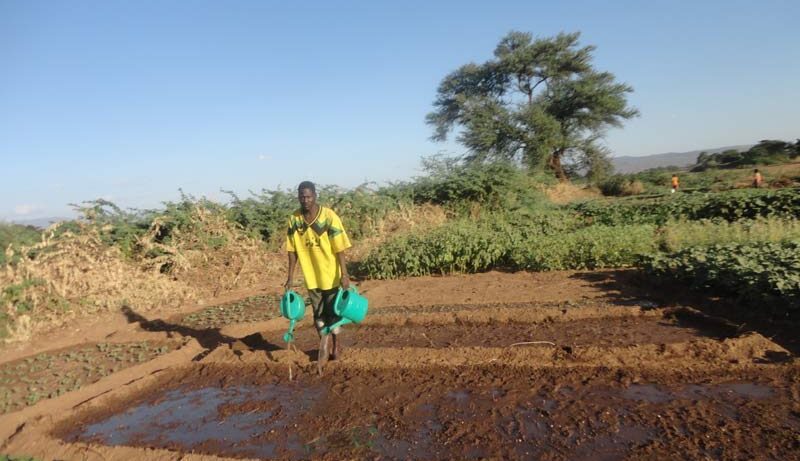
© UNESCO/Nairobi Office, A member of the refugee community at the Kakuka refugee camp watering his vegetables.
The overexploitation of water resources in fragile contexts, from the socio-economic and environmental point of view, is an “external factor” of which the importing country doesn’t care about and that imposes on the exporter, thus giving rise to a sort of “water-colonialism” that is a form of domination and exploitation in water use by the rich countries to the detriment of the poorest.
The concept of virtual water is essential, not only to understand our dependence on hydrological systems, although very far from us, but also to understand the impact that our lives, our daily decisions and activities have on them.
First you must have an idea of how big is our water footprint and what depends.
Food consumption
Eating habits have a major impact on people’s water footprint.
To realize the differences, Barilla CFN has produced two daily menus, both balanced from a nutritional point of view, and calculated the impacts, in terms of water consumption, for both. The first menu includes a diet rich in vegetable proteins and low in animal fats; the second one is based on a consumption, albeit modest, of red meat.
Comparing the impact of the two menus in terms of water footprint, it is clear as the inclusion in the menu of livestock products such as milk and meat, resulting in an increase of about 2 times the consumption of water resources.
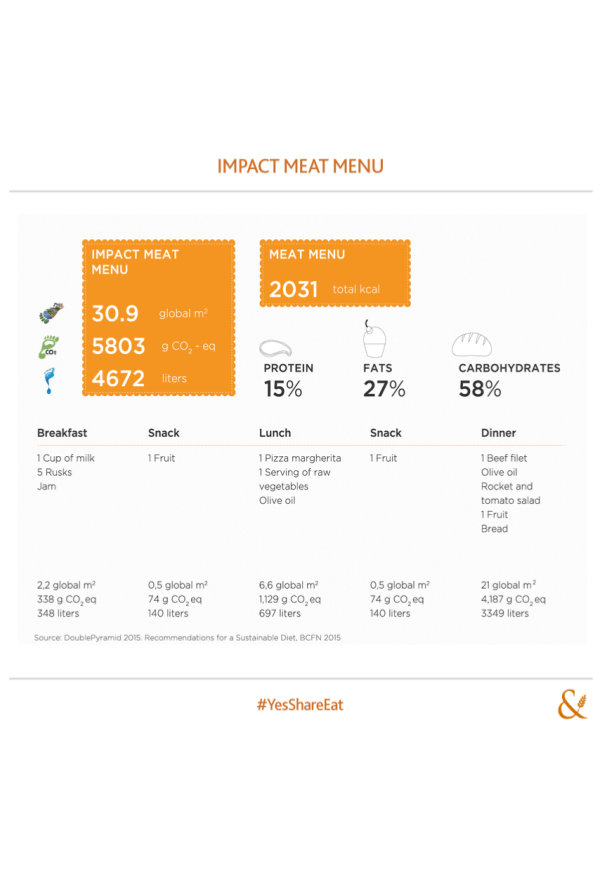
Source “Eating Planet” BCFN
Farms or intensive grazing: differences in the water footprint
The water footprint of an animal product is determined by two main factors:
- the first is the feed conversion efficiency, which measures the amount of food needed to produce a given amount of meat, eggs or milk. Grazing animals can move around more and thus take longer to reach the optimal weight for slaughter, so have a worse feed conversion ratio in meat. For this reason, the efficiency of conversion of nutrients in meat improves moving from pasture to mixed systems up to those of industrial farming, which have smaller water footprints under this specific point of view.
- the second factor is the composition of the food that animals eat in different systems, and works exactly in the opposite direction resulting in favor of grazing livestock systems. When the amount of concentrated feeds in animal diet increases, the water footprint also increases since the concentrated feeds have a higher water footprint, while that of grass, forage or crop residues is relatively low.
The growth in the proportion of concentrated feed at the expense of forage in animal proportion in the transition from pasture, through mixed systems, to industrial breeding, gives as a result a smaller water footprint in the pasture and in mixed systems compared to that of industrial systems.
In general, the water footprint of concentrated feed is five times higher that of the feed. Since the fodder is mainly fed from the rain while the crops for the feeding of animals are often watered and fertilized, blue and gray water footprints of feed are respectively up to 43 and 61 times those of fodder.
The water footprint in Italy
The water footprint of consumption in Italy is 6,300 liters per day per capita, a value 1.65 times higher than the global average. Only 4% of this consumption is related to domestic use, and this is in line with the global figure..
About 96% of water consumption footprint is therefore “invisible” to the consumer and is the percentage linked to consumption and pollution of water behind the products that you buy at the supermarket or elsewhere.
Approximately 89% of the italian water footprint is related to the consumption of agricultural products and 7% to that of industrial products. Nearly half of the water footprint of consumption in Italy has to deal with the consumption of animal products.
The latter figure is itself detector of how much the water footprint of livestock products (meat, eggs, milk and dairy products) is greater than that of grown products and the fact that farm animals consume, in some cases for several years before being transformed into food products, a large amount of grown products as food.
Indeed, the wider fraction (98%) of the water footprint of animal products refers to the water footprint of crops intended for animal feed (drinking water for animals and water for “service uses” are respectively 1.1% and 0.8%).
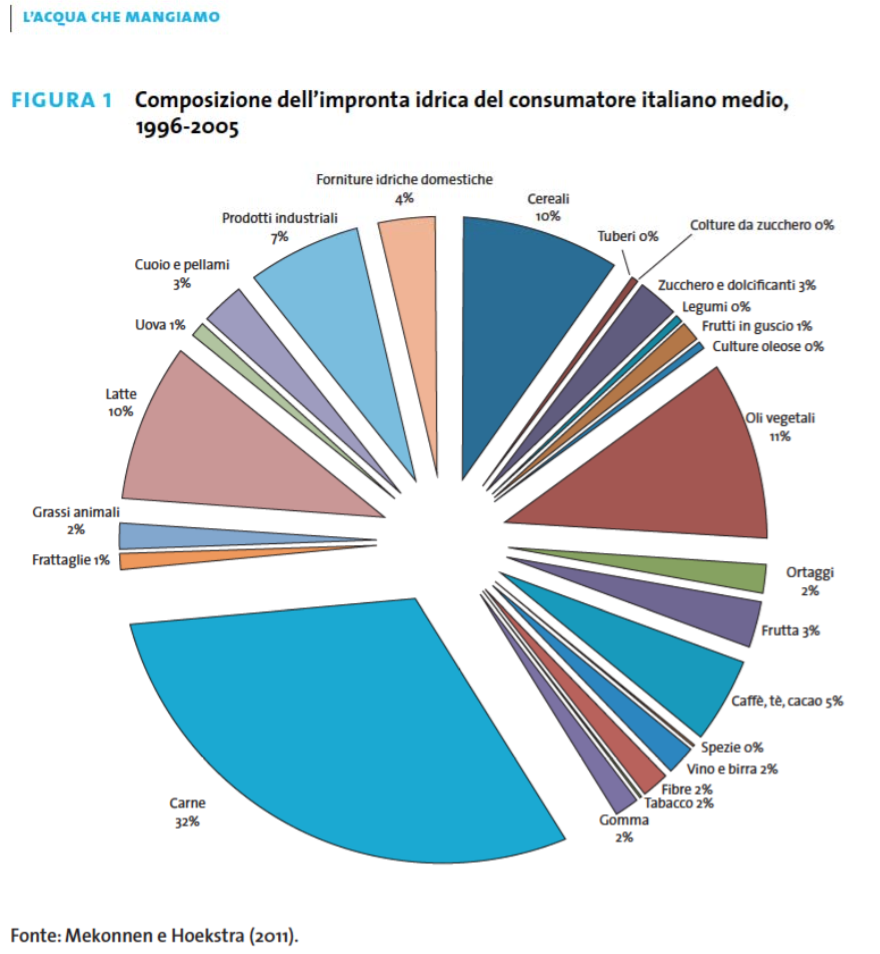
Image from “L’acqua che mangiamo” – Edizioni Ambiente 2013
The world is thirsty because it is hungry
“The world is thirsty because it is hungry” is the slogan chosen by FAO to express the existing indissoluble link between the water consumption and the production of food and which adapts equally well to the connection between the availability of water resources and food habits.
In fact, our food choices lead to quite unsustainable water withdrawals and, if we want to reduce our water footprint, the best thing to do is to take a critical look at what we eat instead of water consumption in the kitchen, in the bathroom or in the garden.
Wasting water has never sense and then saving it whenever you can is definitely recommended, but if we limit ourselves to a reduction in domestic consumption we will not be able to have some positive influence on the serious water problems that plague the world.
So what?
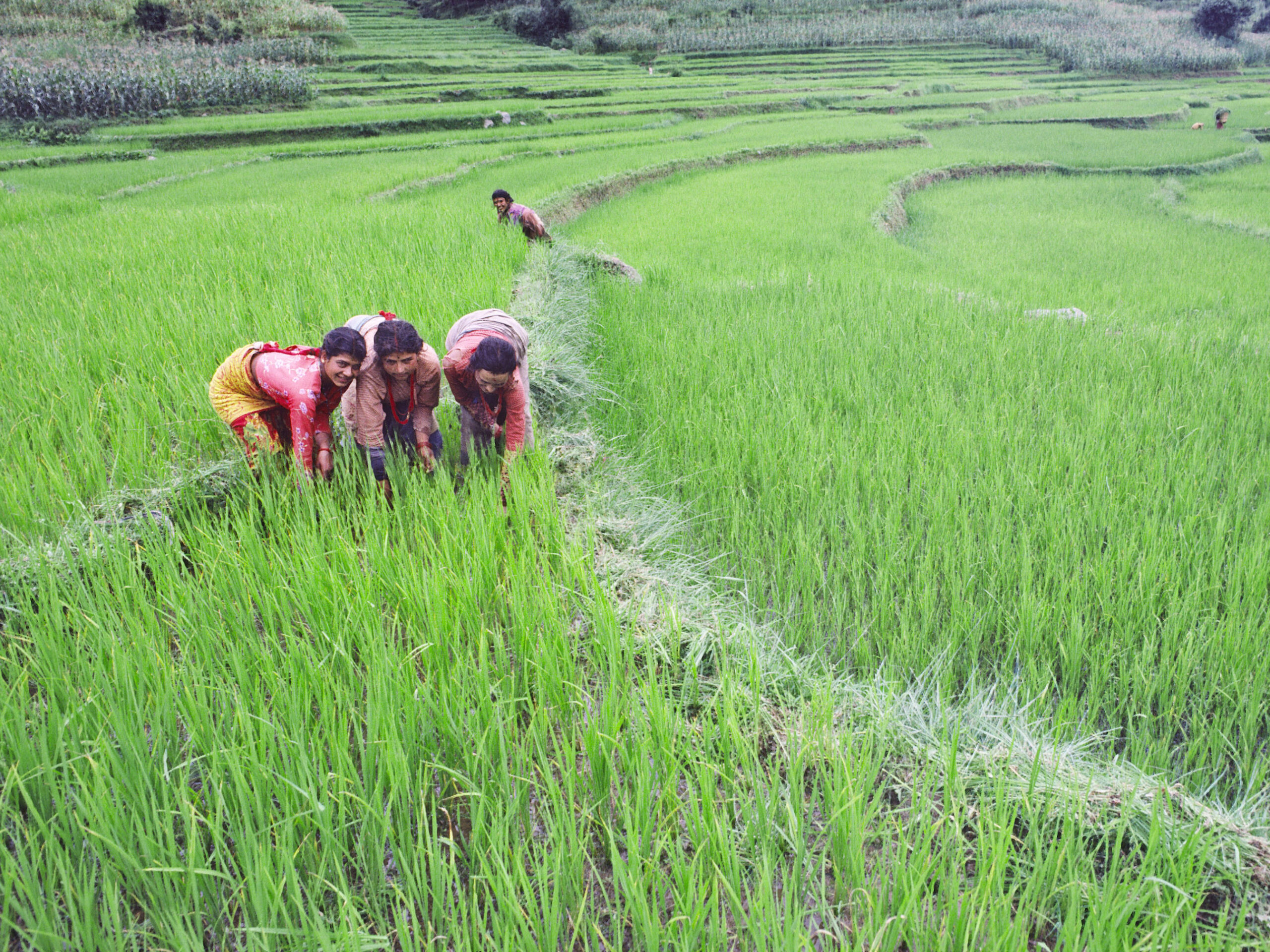
© UN Photo/John Isaac, Women cultivating rice in Palung, Nepal
1. Eat less meat
There is no more doubt that the growth of livestock significantly contributes to climate change, deforestation and over-exploitation of water resources.
- The breeding of animals generates, according to FAO, 18% of the total emissions of greenhouse gases, very high percentage compared to 13% of emissions from transport’s sector and 26% due to the production of energy. According to the Worldwatch Institute, the breeding’s incidence is even 51% because it is necessary to take into account, in our assessments, oxygen that animals need to live, the non-use of the land to produce food for humans or to accommodate forests. The calculation of WWI also considers the energy used to cook meat, for the production, distribution and packaging of animal by-products and the energy needed to produce veterinary medicinal products.
- In terms of water footprint, it is estimated that intensive farming needs about 15,500 liters of water to produce a pound of beef and 3,920 for a kilo of chicken.
- About 3.5 billion square meters of land (or 70% of the planet’s arable land) are intended to produce resources for breeding. 470 million of these are reserved to the cultivation of cereals and legumes for feed production. Livestock farming, together with the timber industry, is the main cause of deforestation in the Amazon region.
If we also consider that:
- intensive factory farms are used large amounts of antibiotics (to prevent the emergence of the most likely and frequent illness, because of the cramped spaces) that we assimilate, favoring the progressive phenomenon of bacterial resistance to antibiotics that is so much alarming the scientific world and health authorities
- in intensive factory farms, animals are reduced to machines, commodities, forced into tight cages or confined in small spaces where they spend a short and painful life. Throughout their existence, the animals are subjected to various mutilations: beak is popped them is severed their tail or wings, are often castrated without anesthesia, they are deprived of the horns at 5-6 weeks of age since the stress produced by the imprisonment and condemnation in a style of unnatural life does not cause them to hurt other animals
- excessive consumption of red meat (especially if you work) increases the risk of developing many diseases, most notably cancer of the colon and rectum (AIRCC – Red meat are bad for your health?)
… any person who cares about his health, world’s health and welfare of animals should dramatically reduce the consumption of meat and animal products and anyhow give priority to those that come from farms where , thank to grazing and traditional breeding, a less quantity of water is consumed, less antibiotics are administered , they do not make animals suffer and in some cases it contributes to the preservation and care of the land (Alpine pastures).
2. Return to the Mediterranean diet
When in 2010 the UNESCO declared it “intangible heritage of humanity”, the scientific fortune of the Mediterranean diet was already fully consolidated. It was the American physiologist Ancel Keys to explain, first in the world, in the seventies of the last century, why in particular regions the population lived longer.
The secret was a balanced consumption of all natural foods favoring, for frequency and quantity, fruits, vegetables and cereal derivatives and, at the same time, reducing the consumption of foods rich in saturated fats, meat and sweets.
Keys discovered that thanks to this diet (which he called “Mediterranean”), mortality from heart disease in the countries of Southeast Europe and North Africa was lower than in Anglo-Saxon countries and in the north, where diet was rich in saturated fats. Thus, it was born the food pyramid (1992, USDA – U.S. Department of Agriculture), where in the base there are foods of plant origin, typical of the Mediterranean diet, rich in nutrients (vitamins, minerals, etc.) and in protective compounds (fiber and bio-active compounds). Going along the pyramid we find increasing energy density foods (very present in the North American diet) which should be consumed in smaller quantities.
The pyramid was revived by the FAO in 1997 and had, over the years, numerous calculations and models (such as those of WHO – World Healt Organization of CIISCAM – Interuniversity Research Center on Food Cultures Mediterranee and HSPH – Harvard TH Chan School of Public Health), all inspired by the same original concept.
In 2009 BCFN – Barilla Center for Food & Nutrition – proposed a major innovation with the Model of the Double Pyramid where the classic food pyramid was accompanied by that “environmental” upside down, in which foods were classified according to their ecological footprint. The goal was to demonstrate the close relationship between the nutritional aspects of the food and its impact on the environment, in particular how to reconcile the health of the person with the environment.
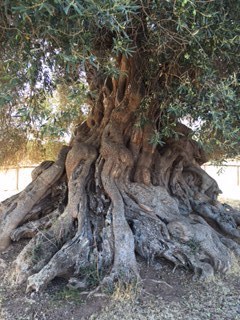
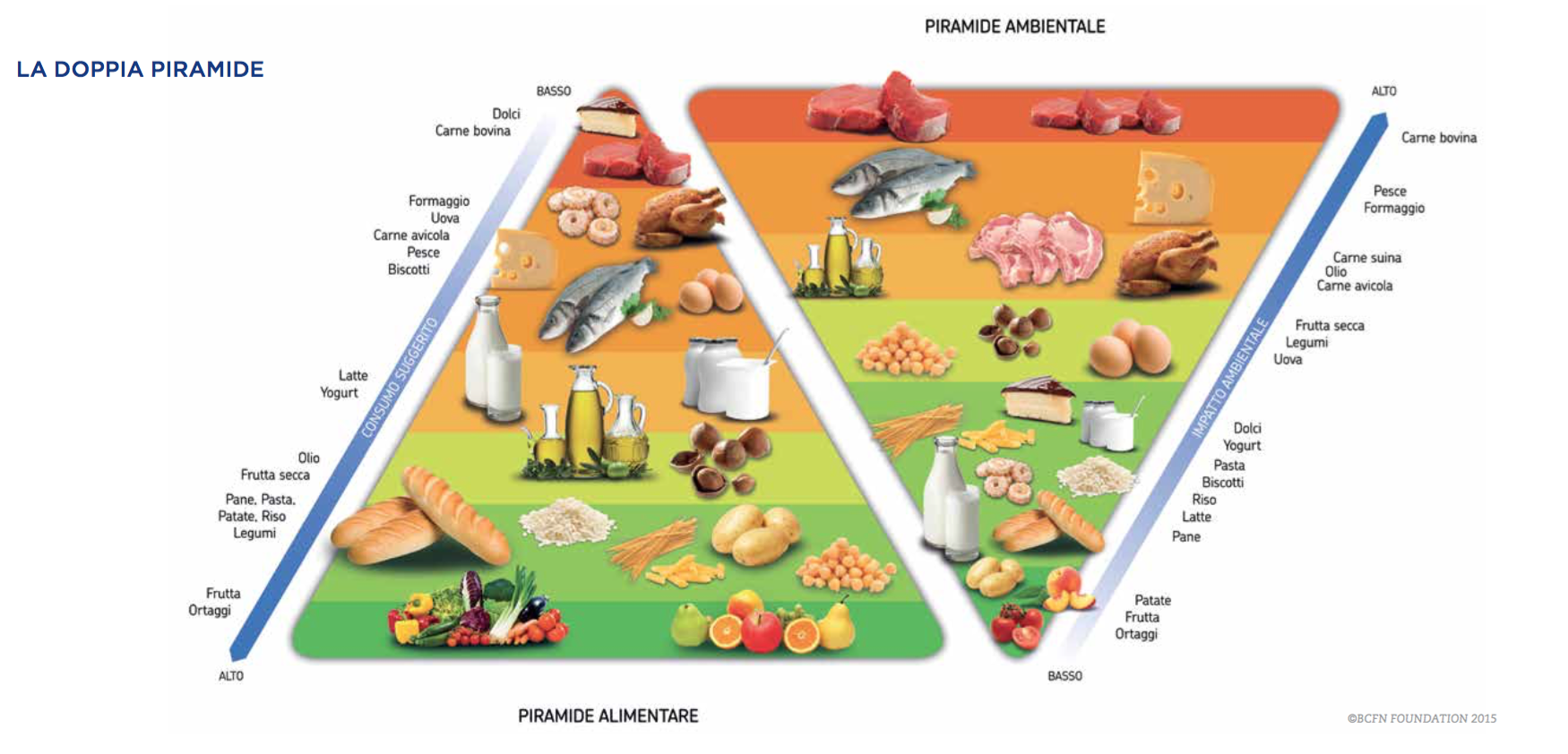
Once they know that the Mediterranean diet is one of the best nutritional models for health and environment (resulting in even lower water consumption) it remains to explain the paradox of why it was gradually abandoned.
It’s like he emerged a gap between choices and ideal conceptions and practices daily (fast food productivity-induced).
However it is increasingly spreading among consumers the belief that health and environmental parameters are fundamental aspects in food choices and the return to an authentic Mediterranean diet could accomplish these aspirations much more than what now does the food choice, only inspired by the price and practicality.
3. Wasting less food
The waste in the waste.
If any food consumption style can theoretically be justified when the food produced is used to its ultimate end, in this case human consumption, it can’t be that natural resources like water, land, energy, jobs are used to produce a food that will not, for various reasons, consumed.
Setting aside for a moment the moral judgments, let’s try to understand what does the waste of food mean, in terms of wasted water.
30% of food production doesn’t reach the table, but at the same time we know that 70% of water resources is intended for food production, so if there was no waste, or better if wasted food had not been produced, there would be a greater availability of water resources for different purposes than agriculture accounting for 21% of their total.
In reality, this calculation is pure abstraction because it is independent from the analysis of wasted type of food (and, consequently, from the calculation of its specific water footprint) and the type of water used to produce it (and therefore the actual possibility of its different use) but it may be useful to give an approximate magnitude order of wasted water.
We can say that the reduction in wasting food, along with the reduction in the consumption of animal products, are the two most effective options that consumers have to significantly reduce their water footprint.
It is not a coincidence that these two behaviors have been considered by the IPCC – Intergovernmental Panel of Climate Change (Chapter 11 Daily https://www.ipcc.ch/pdf/assessment-report/ar5/wg3/ipcc_wg3_ar5_full.pdf ) as the main factors of climate change mitigation in the agricultural sector.
Both the greenhouse gas emissions and the excessive use of water resources can be remedied by changing, without particular effort and discomfort, our consumption habits.
4. Buy seasonal and local products
If, on the one hand, the main advantage about seasonal products in terms of water sustainability is represented by the possible use of less valuable water (the green one instead of just the blue used in glasshouses), more numerous are the advantages talking about local products: firstly, the prevalent use in proximity farming of traditional seeds.
Industrial farming always uses commercial seed, the proximity one frequently uses traditional seed, so called “landraces”. What are the differences?
First of all, commercial seed are designed to grow in any terrain as long to ensure all the external inputs they need (minerals, water, defense against parasites). The traditional seeds instead make their best in particular geographical areas, but in return are more autonomous, because they have adapted to a certain climate, they have developed, thanks to the selection work carried out over time by farmers, the best features for give their crop exactly that hot or cold climate, with that lack or abundance of water, etc.
In addition, the proximity farming, unlike the industrial, agronomic practices that often follows, among other positive effects, reducing the need for irrigation.
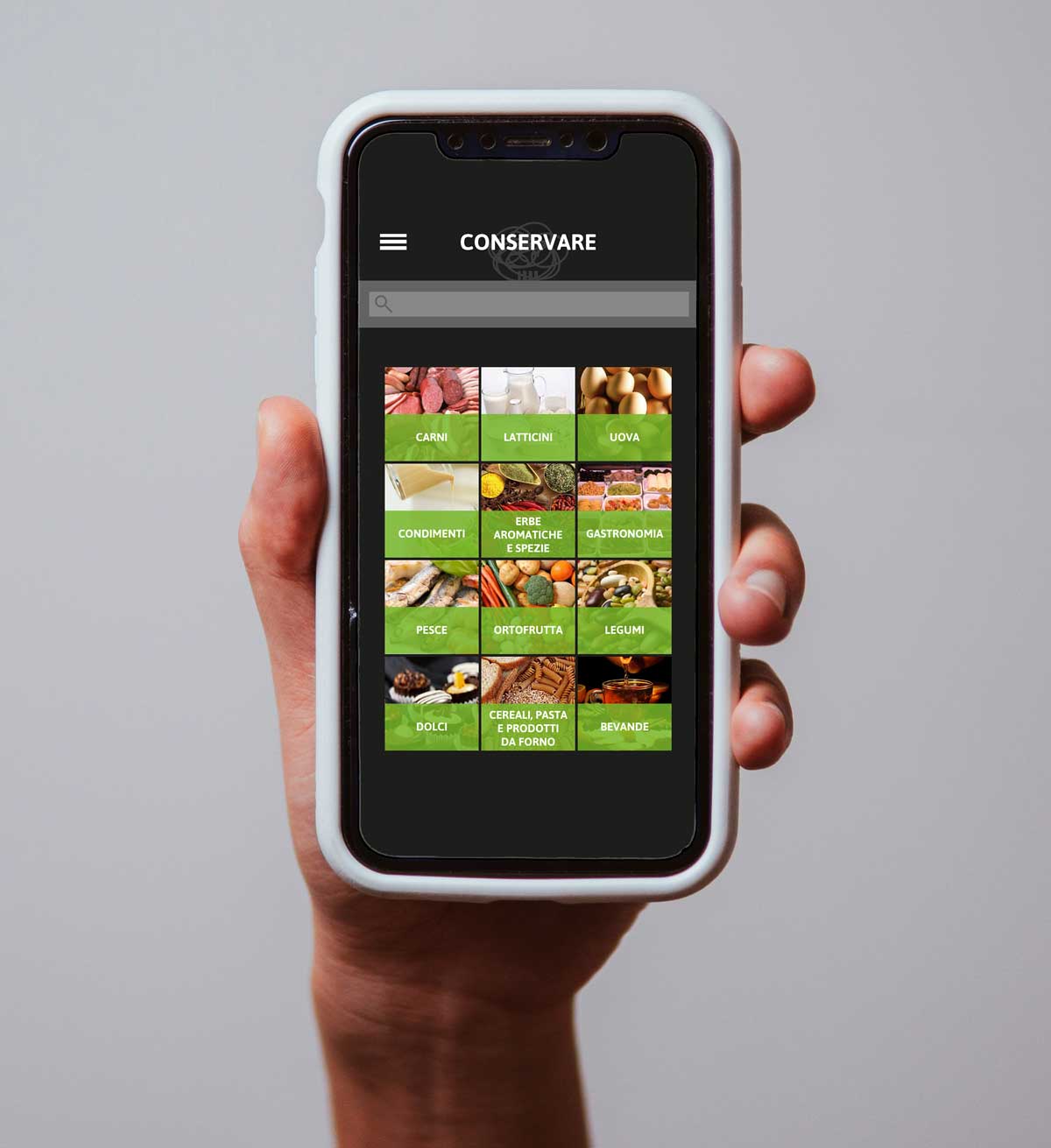
Download our free application UBO App
You can find more than 500 foods, their water footprint, leftover recipes, you can make the shopping list and many other things.


5. Give priority to organic products
In organic agriculture synthetic chemicals are not allowed (fertilizers, herbicides, fungicides, insecticides, pesticides) and thus the water footprint of any organic product has not that amount coming from water’s pollution (“grey” water) which is instead required in the industrial agriculture.
As the “grey” water footprint of the Italian agriculture was calculated on average in 9% of the overall (Italy’s water footprint – WWF Italy 2014), when we eat organic products we save almost ten percent water. Not cheap!