
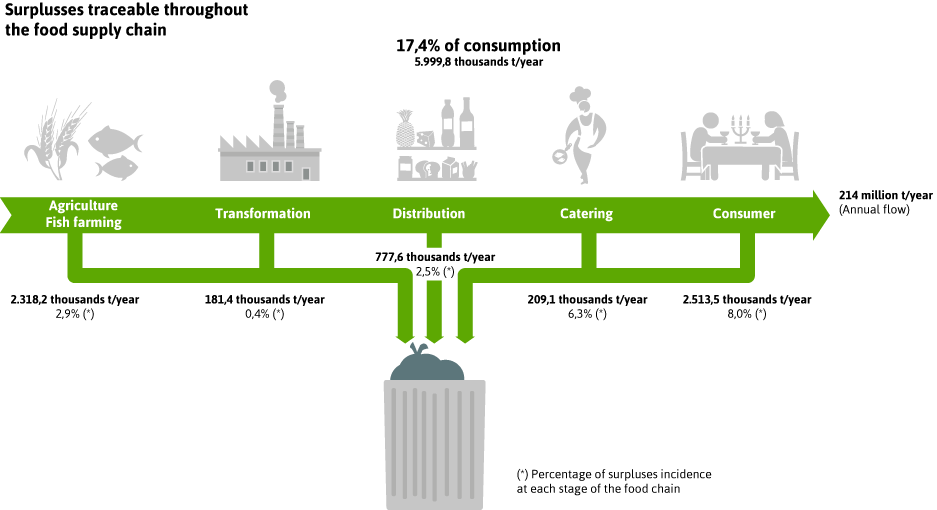
Food waste is distributed along the entire food chain, albeit A Good Opportunity focus primarily on waste attributable to the final consumer, which is also relatively easier to counteract.
But, first thing first, let’s examine all those factors concurring to generate the amount of food waste in Italy and worldwide.
According to a study conducted by the Polytechnic of Milan, 58.1% of Italian food waste is caused by the same dealers operating on the supply chain against 41.9% attributable to consumers. Excluding home consumption, the excess should be charged on the production for 66.5%, 22.3% for distribution, 6% for catering, for transformation 5.2%
.
Overproduction
Responsibilities: Market law
As we know, there is a structural problem of overproduction that, in many cases, leads to the disposal of perfectly edible food before they even reach the network of distributors.We all have in our mind’s eye recurrent images of huge quantities of oranges, tomatoes or other foodstuffs, destroyed or left to rot in the fields; images sparking off our indignation each time we think about all those destitute people who don’t get enough to eat.
The main causes of this regrettable phenomenon are due to the competition of products from foreign markets sold at prices lower than those considered profitable, or rather by the need to keep prices high enough by not putting the entire stock on the market.
Download PDF for more information:
Fishing by-catch
Responsibilities: Market law
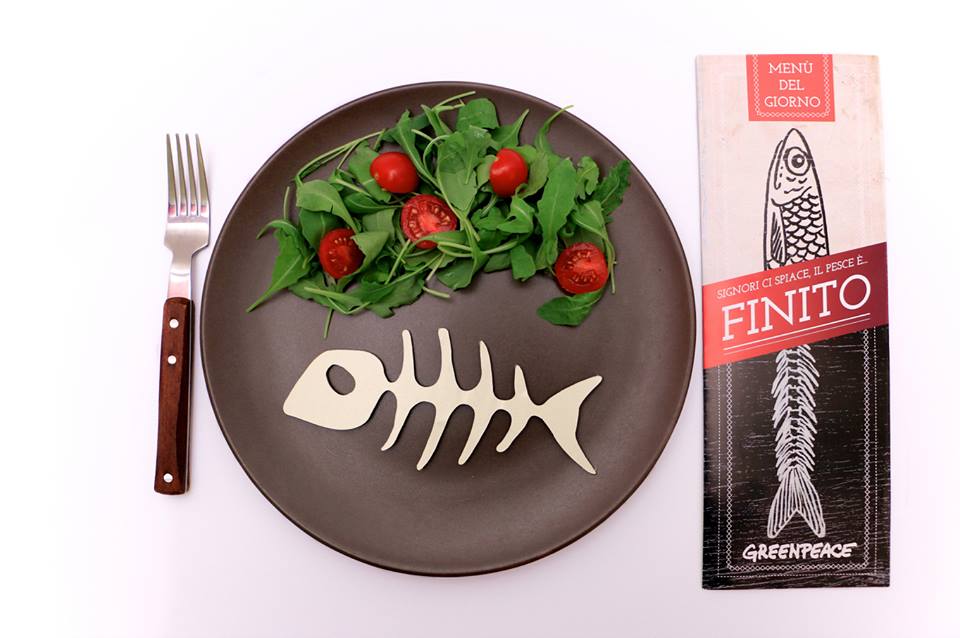
Did you know that 40% of the total catch is discarded at sea? It’s called fishing by-catch the part of the catch consisting of fish which are not target of fisheries and other marine creatures incidentally caught. By catch usually is discarded at sea: in most cases the dumped back fish and other forms of life are dead or at their end-of-life, with very poor chance of surviving. Discards involve anything that is considered “waste”, in particular:
- specimens of the species sought not conform to dimensions (in majority these are juvenile fish, which are not yet arrived at the age of full development) or injured by fishing equipment;
- fish of other species that have no market or are not edible;
- other forms of life (not fish) which remain trapped in the nets as birds, turtles and marine mammals.
The fishing boats rejecting at sea this “discard”, earning space for successive captures and triggering a vicious circle of intensive exploitation of fish stocks and discards.
The practice of discards is widely used on ships of the great fishing industry, while the phenomenon is relatively uncommon in non-industrial fishing.
In 2003 bottom trawling by the countries bordering the Mediterranean Sea was about 153,000 tons, of which 143,000 tons from Greek and Italian fleets.
Source WWF: “Defining and estimating global marine fisheries bycatch” – (year 2009)
Aesthetic imperfections
Responsibility: GDO (mass retailers) and consumers
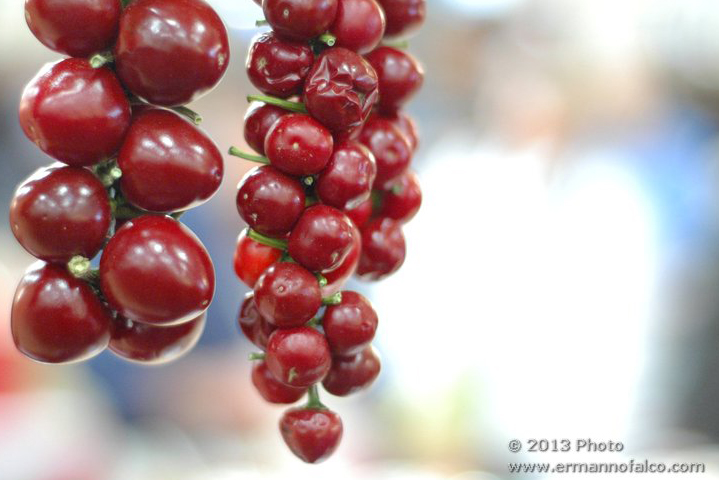
Most of us are strongly influenced by the aesthetics of food and tends to discard the fruit or vegetable having some minorimperfections. Clear proof is provided by the flawless apples sold in supermarkets, whose smooth skin and bright colours are actually due to treatment with pesticides and waxing. While the so-called ‘peasants apples’, which are less than perfect picks are usually better. Even so, the treated ones are usually preferred. The large supermarkets operators are perfectly aware of it and consequently impose high aesthetic standards to the producers, therefore the flawed ranges are excluded from the main distribution circuit.
In Italy approximately 1.5 million tons of agricultural products, 2,73% of the entire production, are discarded at the source
Source: Last Minute Market and UniBo 2011
Critical issues in the dealings between production and distribution
Responsibilities: Food industry and mass distribution
The food processing industry is often forced to recall unsold products from supermarkets, especially those sold on promotional offers, or local foods related to festivities (such as chocolate Easter eggs or special Christmas cakes) or foods with a very short shelf life (think fresh milk).
Goods return might already occur at the time of delivery (the so-called return delivery); especially when – as a standard procedure – a load is rejected because its expiration date is closer than that of the one already received.
In most cases, the products are thrown away because it is too complex and too expensive to redirect them to alternative distribution channels.
Mistakes in the production planning or forecasting the market demand
Responsibility: Food industry
If a batch of products exceed the immediate absorption capacity of the regular customers, the processing companies may not be able to find new customers because of the shortened residual ‘ shelf life of their products’ (the shelf Life is the length of time for which a product can be stored without becoming unfit for use or consumption). In fact, the (GDO) Large Retail Organization requires at least two-thirds of the total shelf life, exceeded limit it is unlikely to find any buyers.
Download PDF for more information:
Forsaking the ‘ doggy bag ‘and other catering waste
Responsibility: Restaurant Managers and Consumers
Unlike the Anglo-Saxon countries, in Italy is an uncommon practice to take home the leftovers from meal eaten at the restaurant. Beyond the obvious hypocrisy of the name, ‘ doggy bag’ attributed to the bag or paper box usually used for this purpose (as if all leftovers were really intended for the dog …), this is a commendable habit that should be by any means promoted. Anyway, in catering, the leading cause of surpluses is another one, more difficult to counteract, that is the wrong menu planning to estimate the expected cost/budget for food. It is not easy in fact, to predict the number of customers and their meal schedule, neither it is to predict with sufficient accuracy which foods will be required. If you make a mistake, it is not always possible to recycle the dishes for the next service.
Download PDF for more information:
Full shelves
Responsibility: GDO and consumers
It seems that the view of the shelves overflowing with goods has a psychological effect on customers, reassuring them and contributing thereby to the success of the store. The GDO (Mass Distribution, well aware of it, strives to keep shelves always full until the end of the day. This strategy, of course, creates a problem of surplus disposal.
Download PDF for more information:
Packaging: from attraction to repulsion
Responsibilities: GDO and food industry
Theaesthetic of the packaging often leads to thepurchase of a product, but it can also cause its rejection.. For example, when the packaging is linked to a prize contest and the contest expires, the remaining stocks are withdrawn because the customer buying the product may be disappointed and therefore lose confidence in the company.The same goes for products with damaged packaging.
Use-by Dates
Responsibility: GDO (Mass Distribution) and Consumers
Let us thoroughly analyse this issue in the assigned section, through statistical surveys and laboratory analysis. Let’s observe how most of us waste lots of food just because of our reluctance to eat something near to its use-by date (when in fact it is perfectly edible) or because the words ‘best before‘ is misleadingly interpreted the same way as use-by date itself. The stores taking the goods off the shelves ahead of time second this proneness of the consumer.
In Italy 42% of household waste is due to food past its use-by date or gone “off”.
Source: Polytechnic University of Milan
Impulse buy
Responsibility: Consumers
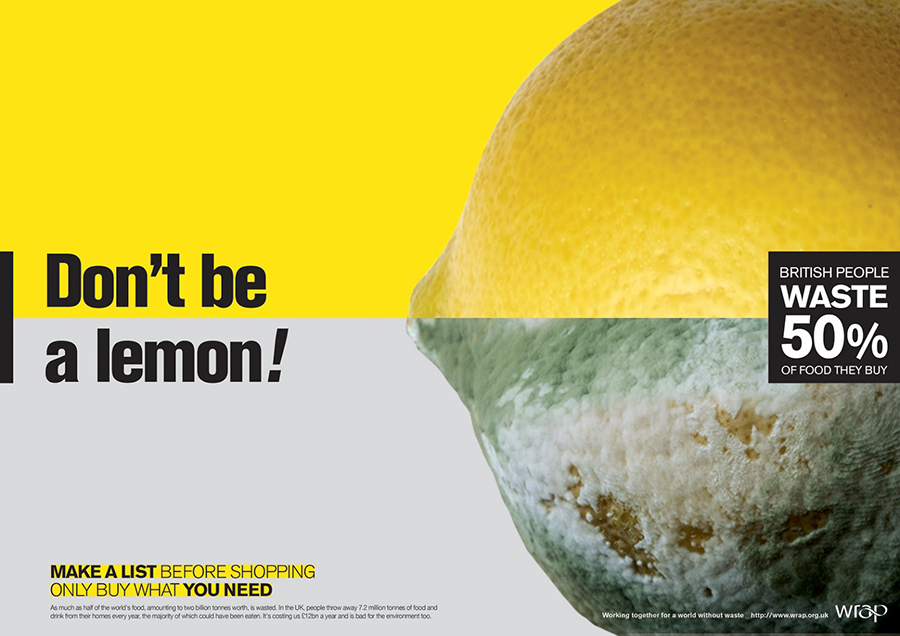
Today it is increasingly in vogue the so-called ‘impulse buying’. While in the past shopping was done keeping one’s eye on the shopping list, recently people have fallen out of the habit of drawing it up at all. Therefore, we walk the aisles of supermarkets putting in the cart everything we think we might need.
Evidently, this behaviour tends to generate a volume of purchases unnecessarily high, causing unavoidable waste. Leaving to psychologists the task of investigating such anxiety-ridden behaviour, we want to remark on the role played by the set scene, the design of products display, he importance given to the scene by the paths, the presentation and display of goods: everything in these “temples of consumption ” attract us and become desirable…
The tendency to cook too much food
Responsibility: Consumers
There are at least two reasons why we cook too much: the first one is cultural and is related to the atavistic concept of abundance as a manifestation of wealth, the second one, far more trivial, is due to the fact that buying in bulk costs less, therefore we cook more food because it is proportionally less expansive. For the same reason there’s a tendency to buy more than necessary to benefit from promotional offers based on price pack deals where buying an extra amount of a product is more convenient (3 for 2 / 2 for1 deals).
The tendency to cook too much food is exacerbated by the non-reuse of leftovers. The point is we cook more food than we can consume or reuse. This phenomenon is largely due to the change in our lifestyle: for our grandparents, food was foremost in the shopping list, funds were scarce, women stayed at home to take care of housework and for those with rural origins to recycle food scraps was considered as a value, a virtue. Today all this has changed (in many ways for the better if we consider the female condition) and recycling leftovers seems to have taken on a vaguely depressing note, as if it were perceived as the characteristic behaviour of poor families only. Add in one too many elaborate leftover recipes, more difficult to make than others and, “voila”, … wasting is served up.
Ignorance of the thumb rules of household budgeting
Responsibility: Consumers
Still talking about our grandparents, it must be said that they were well aware of some basic household rules. They knew, for example, that the newly purchased food supplies should be put in the rear of the fridge behind the old ones so that the latter are consumed first. They knew how many days you can preserve various foods, in or out of the fridge, without risk. They had a good knowledge of food preservation. They knew how to make the most of leftovers with tasty recipes. They had a knowledge we seem to have forgotten.
Download PDF for more information:
40% of the Italians declare to throw away food because of mistakes in the conservation and management supplies.
Source: Report 2013 – Waste Watcher
The waste of water
Responsibility: Consumers
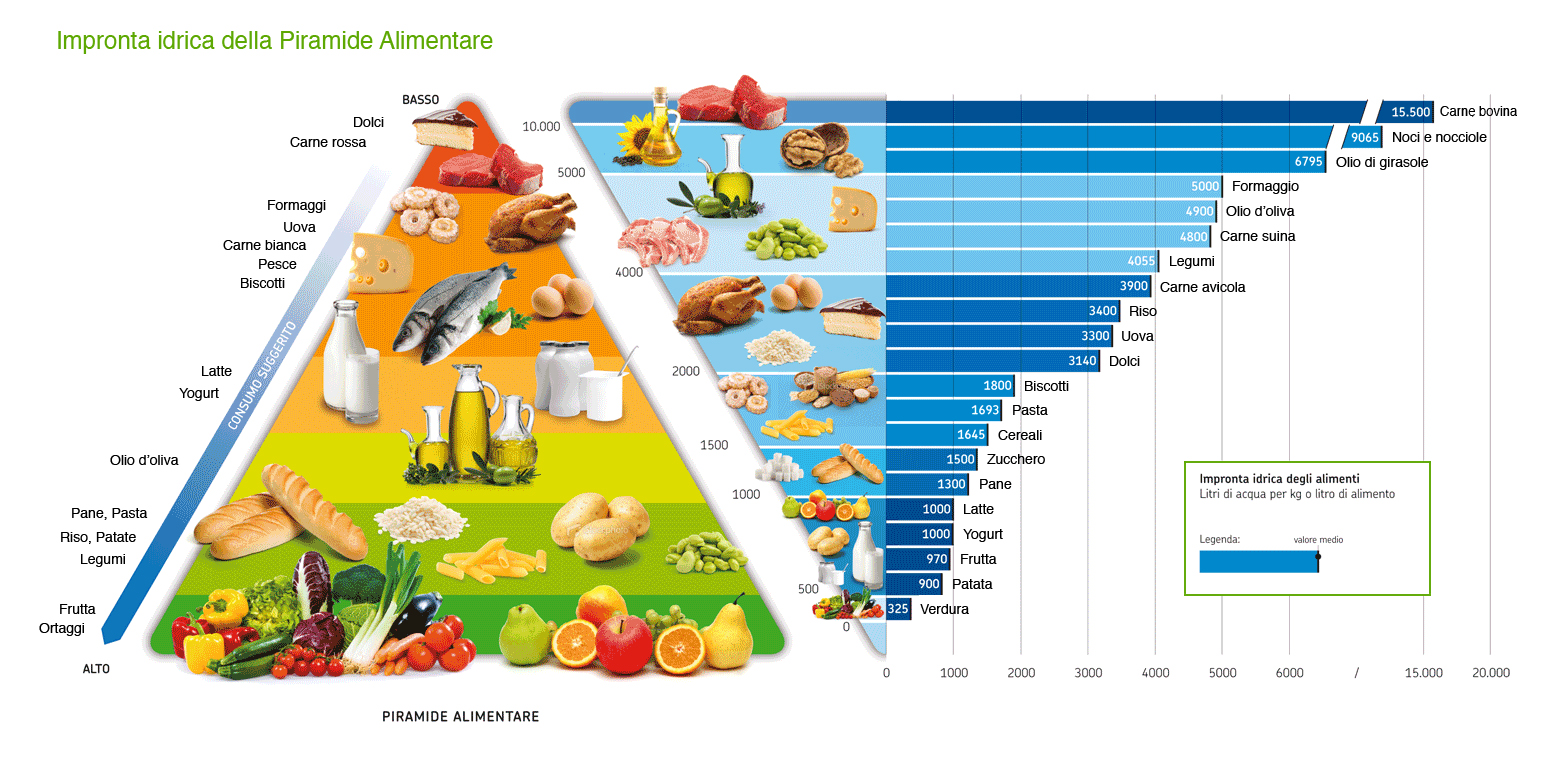
The gradual increase in geographical areas that were immune (such as the Mediterranean) to diets rich in proteins, animal fats and simple sugars is leading to high costs in terms of energy, water and territory necessary to produce the foods that are part of it.
Just think that to produce one kilogram of vegetables we need 325 litres of water, for one kilo of pasta the consumption of water rises to 1,693 litres, for one kilo of cheese you get to 5,000 litres and for one kilo of beef, hold on tight, up to 15,500 litres!
Further information can be found in the section dedicated to water waste.
Fonte: www.ambientebio.it
Food does not have a price but a value
Responsibilities: Market law
We have decided to indicate in the end an issue that we should have probably mentioned at the beginning because it is not easy to understand, and it might look a ‘highbrow paradox’. If we had done so many would not have continued reading: food is wasted because – for many of us – it costs too little.. Actually, we have been persuaded somehow that food is a commodity as many others, subject to the law of supply and demand, so if it is cheap it’s not a problem to throw it away. Nevertheless, it is not like that. Food represents our culture, our tradition, our territory, food is convivial, food gives us pleasure, the food has a value and values should not be wasted, and if you fritter them away, you will become poorer.